
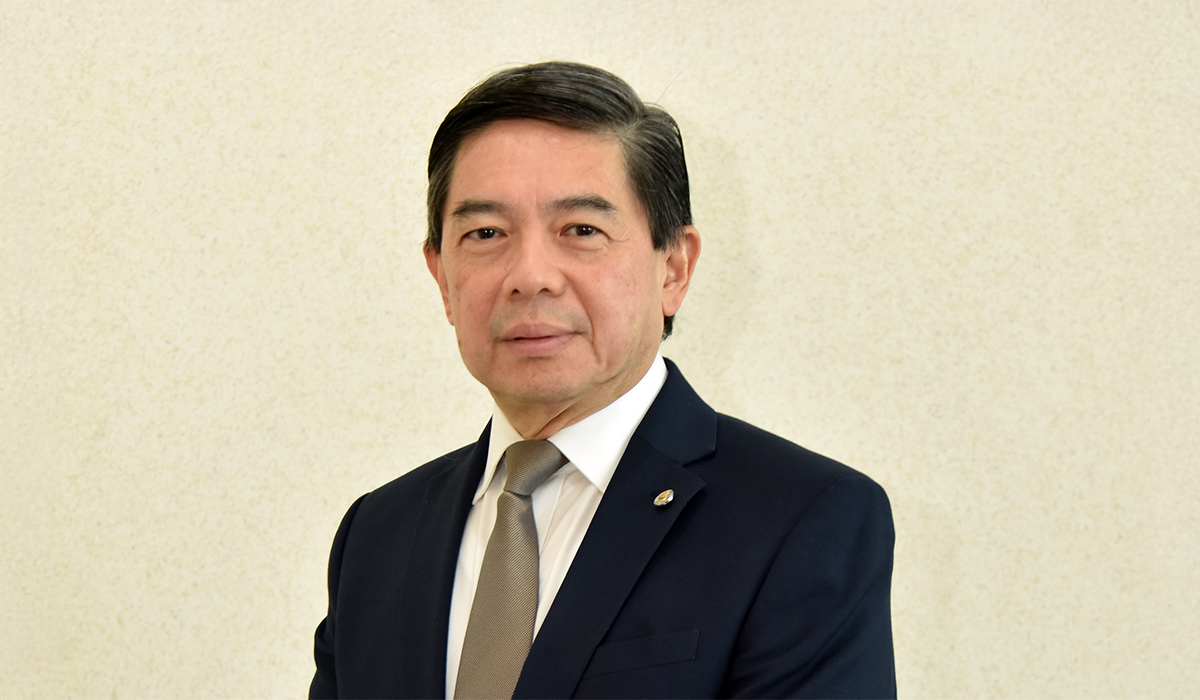
04 Dec Interview with Yang Berhormat Dato Seri Setia Dr Awang Haji Mohd Amin Liew Bin Abdullah, Minister at The Prime Minister’s Office and Minister of Finance and Economy II, Brunei
As Minister of Finance and Economy, what are your core priorities for advancing Brunei’s economic diversification under Wawasan Brunei 2035?
Under Wawasan Brunei 2035, our priority is to build a dynamic, sustainable economy guided by the Brunei Darussalam Economic Blueprint. Diversification is central: while oil and gas have long anchored our economy, we are accelerating new sectors and widening opportunities for SMEs. The blueprint identifies five priority areas—downstream energy, food, tourism, ICT, and services—though we remain open to investment beyond them.
In downstream energy, we are expanding into chemical production to broaden our manufacturing base. In food and agriculture, we are strengthening local production and the full paddy value chain, attracting partners who bring advanced and AI-enabled technologies to support local producers. Services, particularly at Muara Port, are growing rapidly. Joint ventures have boosted efficiency, expanded international routes, and increased exports. We are building a new container terminal and a maritime cluster to create jobs and support in-country vessel maintenance. ICT is another pillar of competitiveness. Investments in telecommunications, 5G, digital infrastructure, and AI applications are enhancing productivity, supporting startups, and strengthening health and education systems. Tourism offers further potential, leveraging Brunei’s pristine rainforests and authentic, non-urban experiences to attract high-value visitors and investors.
Across all sectors, a whole-of-government approach ensures investors connect with the right stakeholders. This focus is yielding results: GDP grew 4.2% last year—the highest since 1999—and unemployment has fallen from 9% in 2017 to 4.8% in 2024, the lowest since 1991. Oil and gas now account for less than 50% of GDP, and for the first time, non-oil exports exceed traditional hydrocarbons. As aquaculture, ICT, services, and other sectors scale, they will play an increasingly prominent role in achieving Wawasan 2035’s vision of a sustainable, high-skilled economy with strong social welfare.
Which environmental initiatives reflect Brunei’s commitment to sustainability, and how do you see green energy evolving as the country targets 10% renewables by 2035?
Brunei’s green agenda is now firmly embedded in policy. Since 2020, we’ve implemented a national climate change plan built around ten strategies, with emissions reduction in power generation and transport as the main focus. We are upgrading to cleaner plants, promoting EV adoption, and targeting a 20% emissions cut by 2030 on the path to net-zero by 2050.
Around 60% of Brunei remains virgin forest, and 70% is green cover. A dedicated committee oversees activities near sensitive areas to ensure protection. We also report regularly to the UN, outlining progress and adaptation plans. As we work toward sourcing 10% of our power from renewables by 2035, these measures will guide how our green energy transition develops in the coming decade.
What makes Brunei a competitive and secure destination for FDI, especially for U.S. investors?
Brunei offers political stability, peace, and an investor-friendly environment, supported by strong connectivity to major Southeast Asian cities such as Kuala Lumpur, Singapore, Bangkok, Jakarta, Manila and Hong Kong. With sectors outside oil and gas growing from a low base, new opportunities are emerging, and our macroeconomic indicators have strengthened in recent years.
We are also one of the region’s safest countries in terms of natural disasters. To support foreign investors, we are exploring a co-investment fund that pairs them with local expertise and helps smooth early operational challenges. Managed by experienced professionals, it would give investors a reliable partner as Brunei continues to position itself as a secure and strategic destination.
Where do you see the strongest opportunities to deepen economic collaboration between Brunei and the United States?
Brunei is small and often overlooked, but modern manufacturing does not always require a large domestic market. High-value products can be produced efficiently here, and we are working to bring more U.S. companies into the country. As ASEAN members, we engage closely with the US-ASEAN Business Council and recently met in Kuala Lumpur to explore how Brunei can better align with U.S. business interests. We also work with U.S.-based partners to promote Brunei and attract investors suited to our strengths. These ongoing engagements help deepen cooperation and open new opportunities.
LA Times: Is there anything you would like to add for our readers?
We support local SMEs through mentorship as much as funding. Established companies guide startups, and our innovation center incubates new tech ideas. We invite regional angel investors to hear pitches, and when foreign angels invest in local startups, the government matches their funding to accelerate growth. This has already attracted promising companies—from Pony Divers, which is expanding into marine conservation and now employs 50 people, to a growing local food-delivery startup now drawing interest from foreign private equity. Their momentum shows how diversification beyond oil and gas is taking shape.
We welcome investors from all countries and aim to build a diverse investor base. Supportive infrastructure matters too: Brunei offers strong international schools, including the award-winning Jerudong International School, and reliable healthcare through government and private hospitals. Many foreigners who work here choose to stay because Brunei is quiet, nature-rich, safe, and welcoming. These qualities make it not only a good place to invest, but a good place to live.
Sorry, the comment form is closed at this time.