
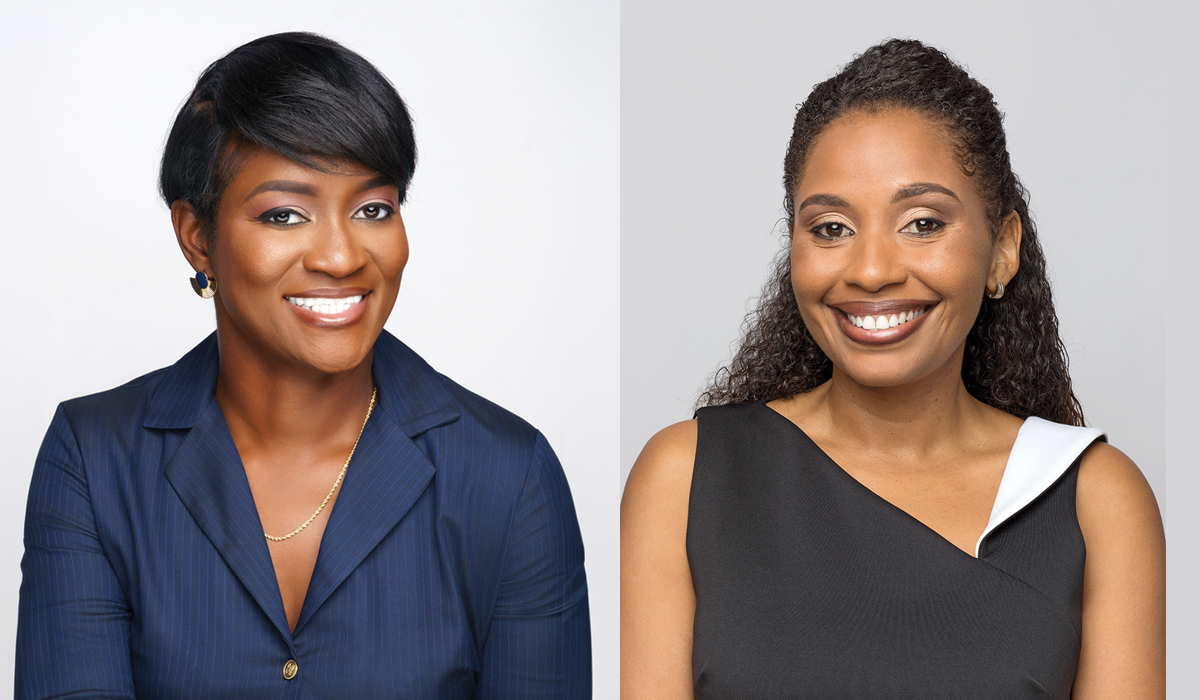
06 Jul Interview with Valérie Damaseau, President Aïda Weinum, Director Office de Tourisme de Saint Martin
Saint Martin welcomes nearly 2 million visitors a year despite its small population, with North Americans making up roughly half of all stay-over travelers. What makes Saint Martin’s French side such a distinctive and compelling destination for U.S. travelers? How does its Dutch-French identity set it apart in the Caribbean?
Aïda Weinum: We often say we were European before Europe, because of our free border. Administratively, there is a French side and a Dutch side, but it is one island. For years, we have shown what true collaboration looks like — different systems, even different voltages and currencies, working seamlessly together. That makes us very easy to understand for international visitors. For the U.S. market in particular, our advantage is that we are European, yet English-speaking, which is quite unique. We are just a three-hour flight from Miami, with frequent connections, making access very simple.
On the French side, our autonomy is a real asset that Americans appreciate — from French pharmacies to our relaxed lifestyle, gastronomy and activities. Our accommodation is more intimate: villas and boutique hotels rather than large resorts. In that way, the French and Dutch sides truly complement each other, offering visitors the best of both worlds.
What key factors drove the sharp rise in arrivals across 2024 and 2025 and how is this translating into tangible economic benefits for the island and the Collectivité de Saint-Martin?
Valérie Damaseau: After Hurricane Irma and the pandemic, we went back to the drawing board and placed culture at the heart of our tourism strategy. Everything we do involves our people — not only in the experience itself, but also in how we market and communicate the destination. Instead of only institutional voices, we let our chefs, musicians and cultural ambassadors tell the story. That creates a more authentic connection and clearly differentiates us beyond sea, sun and sand.
Aïda Weinum: This approach has worked because of strong, ongoing collaboration with stakeholders across the French and Dutch sides and even with neighboring islands. That unity has been our focus over the past few years. This has been a collective effort by all stakeholders. Despite major challenges — hurricanes and COVID-19 — we never stopped promoting the destination in the U.S. market. We stayed visible, consistently engaging with tour operators and travel agents and reminding them that we were open for business.
The accommodation sector also played a major role. Nearly 95% of hotels and rentals now offer renewed or upgraded products, keeping the destination fresh and attractive. Innovation is essential. Under the leadership of the president, we launched a culinary festival five years ago to truly showcase our identity as the culinary capital of the Caribbean. Held annually before the season, it sends a clear message about who we are and what makes us unique. Collaboration has been key. The airport is now operating at full capacity and when we engage airlines at events like Routes, we do so together, French and Dutch sides united, showing that any new air service benefits the entire island economy.
You are responsible for promoting French Saint Martin internationally and supporting a resilient, year-round tourism economy. Can you briefly explain the core mandate of the Saint Martin Tourism Office and how it works in synergy with the Saint Martin Tourism Bureau?
Valérie Damaseau: We have to be honest: this is one island with one international airport, shared by the French and Dutch sides. Thinking we don’t need each other would be a mistake. The airport is just five minutes from the French side and collaboration has never really been an issue — we are, quite simply, each other’s keepers. We offer different but complementary products: mass tourism on the Dutch side and a more boutique, lifestyle-driven experience on the French side. That complementarity makes cooperation not only natural, but essential.
Aïda Weinum: Administratively, our objective is to protect the economic interests of the French side, but that doesn’t limit collaboration — in fact, it strengthens it. For example, although Winair is based on the Dutch side, its regional network aligns perfectly with our goal of attracting new visitors. That is why we partner with them to bring travel agents and regional media to experience the destination — a win-win for the airline and for the island.
We take the same approach with European carriers like Air France. What makes this collaboration effective is that every action benefits the entire island. An initiative on one side generates business for hotels, restaurants, car rentals and attractions on the other — and vice versa. On the French side, we stay closely connected with travel agents, media and influencers, supported by incentives and a year-round events calendar, with special emphasis on the off-season.
Our newest focus is on authentic, off-the-beaten-path experiences — connecting visitors with local communities, from cooking with locals to sharing stories in their homes. That is how we showcase SaintMartin in a way you won’t find anywhere else. In January, our teams met with our Dutch-side counterparts to define a shared vision for our 2026 action plan. While we don’t do everything together, each year we align on joint actions to optimize resources and funding for the benefit of the entire island, in close collaboration with the Dutch-side Tourism Bureau.
Which key achievements best reflect your impact in strengthening the island’s international visibility for 2025?
Valérie Damaseau: This year, more than ever, we focused on conversion. After years of testing different promotional approaches — through events, gastronomy, romance and more — we can now clearly see the results. A key factor has been collaboration. Instead of acting alone, we aligned our efforts with the airport, the Port of Saint Martin, neighboring islands like Guadeloupe and even across both sides of the island. That collective approach has helped us regain our numbers and return to strong performance.
Aïda Weinum: 2016 was our benchmark year — an exceptionally strong year for the island. In 2025, we surpassed those figures, which is a major achievement and a clear sign of a healthy economy and a strong tourism product. Celebrating the fifth edition of our culinary festival is another milestone. What began as an in-house initiative has become a key moment that signals the start of the season, according to our stakeholders. We are also proud that, even without external representative agencies this year, our team successfully delivered all planned actions. That speaks to our resilience and capability.
What are your key plans to promote the island in 2026?
Valérie Damaseau: Enhancing the visitor experience remains a priority, through continued collaboration with our stakeholders and, in particular, our associations. They are key to delivering authentic experiences that resonate with both locals and visitors. We want to strengthen our work with associations and cultural departments to showcase these experiences year-round, not just at specific moments.
Aïda Weinum: 2026 will be a challenging year, as demand is already very strong — many hotels are nearly full. Our focus is shifting accordingly, less on peak-season promotion and more on supporting growth during the summer months. We are aligning closely with our stakeholders to ensure that everything we do highlights Saint Martin as a complete experience, not just a vacation. We are also pleased to welcome new airlift, with Air Caraïbes launching service from Paris and Southwest expected to begin flights in April, as we continue to expand into new markets.
Significant upgrades to air, sea and ground infrastructure are reshaping the island’s tourism capacity and visitor flow. On the French side, high-end properties such as La Samanna and Hôtel L’Esplanade continue to anchor luxury tourism growth, while its famous “restaurant row” stands out as a pillar of global cuisine. Which recent flagship developments have most redefined the luxury hospitality and cuisine landscape on the French side of the island?
Valérie Damaseau: Our focus remains on a boutique tourism model on the French side. We are not pursuing mass tourism; our target is a maximum of 3,500 rooms. Once we reach that capacity, we consider the destination balanced. Rather than building large new hotels, we prioritize revitalizing existing properties that have been inactive, such as Happy Bay and La Belle Créole. We have completed assessments and are working closely with government to connect investors with property owners.
Recent progress has been made and while these projects take time, our infrastructure investments — in utilities and services — support this approach. The goal is clear: reach 3,500 rooms through thoughtful redevelopment, not expansion beyond that. Tourism employs roughly one third of the workforce, maybe more than that. It generates close to 75% of foreign exchange earnings for the island. Strengthening the talent, the workforce in these areas and also SME participation remains critical to sustain the growth in the sector.
How would you assess the strengths and capacities in terms of talent development in the tourism sector and within the tourism workforce? What sort of initiatives are being implemented to continue strengthening the level and the workforce that you have in the sector?
Valérie Damaseau: Tourism represents about 95% of our economy, so investing in people is essential. Beyond promotion and marketing, we work closely with the government, training centers and the education system to strengthen the tourism workforce. After the hurricane and the pandemic, an assessment identified skills gaps across the sector — from front-line roles to management. In response, we support targeted training for reception, hospitality service and hotel management. We also run a tourism awareness program that showcases the full range of tourism careers, from airport services to hotels and restaurants. The goal is to better prepare local talent and ensure the industry has the skilled workforce it needs.
Aïda Weinum: We track all new tourism products through our internal system. In 2025 alone, more than 75 new restaurants opened on the island. Our team is regularly on the ground to identify new activities and venues so we can promote them effectively. We are also seeing strong growth in boutique hotels — often 10 to 20 rooms — as well as in the villa market, which continues to expand across the island.
Following the Tourist Office’s presence at Seatrade Cruise Global 2025 in Miami, how central is cruise tourism to the island’s visitor economy? What steps are being taken to strengthen its appeal to North American cruise passengers?
Aïda Weinum: Cruise tourism is a key focus for us. Of the nearly two million cruise passengers who visit the island each year, a significant number come to the French side. We want to ensure they feel truly welcomed, with highlights such as Orient Bay and Marigot, supported by authentic cultural entertainment. We work closely with all stakeholders to ensure a high standard of hospitality.
In addition to Great Bay, Marigot Bay also welcomes cruise vessels, particularly higher-end ships. Through our collaboration at Seatrade, we align on expectations and focus on offering exclusive, curated experiences — not mass tourism — working closely with local foundations and partners.
The U.S. remains the biggest tourism market for Saint Martin accounting for a majority of all visitors coming to the island. You opened Caribbean Week 2025 in New York. How have initiatives like this strengthened Saint Martin’s U.S. visibility and what more is needed to capture untapped markets such as the West Coast?
Aïda Weinum: We will maintain a strong presence in our key markets. In early 2026, we plan to launch a bid for a representative agency to strengthen our on-the-ground visibility. We will also roll out awareness campaigns, some in collaboration with our Dutch-side counterparts, to reinforce how accessible Saint Martin is. These initiatives will target consumers, trade and media to ensure the destination remains visible and top of mind.
From your perspective, which tourism segments offer the strongest opportunities for foreign investment and why is now the right time to enter the market?
Valérie Damaseau: Our strategy is clear: reach a maximum of 3,500 rooms while maintaining a high-end, boutique positioning. To support this, we have put incentives in place to attract investment, with a strong focus on sustainable and environmentally responsible tourism. Rather than building from scratch, we prioritize reviving a limited number of existing properties. We work directly with property owners and act as a one-stop shop, helping investors navigate administrative requirements and access incentives. Today, our main investment focus is accommodation, particularly boutique hotels, to strengthen our product and reach our room cap in a thoughtful, controlled way.
What final message would you like to share with U.S. readers?
Valérie Damaseau: Few places in the world offer the diversity you find in Saint Martin. In one destination, you experience both French and Dutch cultures, just minutes apart. You arrive at the international airport and, within five minutes, you are on the French side enjoying fine dining, great wines and authentic experiences. Saint Martin is also ideal for island hopping — Anguilla is 25 minutes away, St. Barts 45 minutes, with Guadeloupe and Martinique close by — making day trips easy and seamless. We describe the destination as ‘à la carte’: perfect for families, couples, celebrations or solo travelers. With easy access, multiple currencies accepted and a safe, welcoming atmosphere, Saint Martin truly is a one-stop Caribbean experience.
Aïda Weinum: Saint Martin is open for business. We offer easy access, outstanding cuisine and a unique blend of cultures in a safe, welcoming environment. Visitors are free to explore the island, not just stay in a resort, and enjoy events throughout the year that showcase our identity. We invite everyone to visit — and to invest — and experience what makes Saint Martin truly special.
Sorry, the comment form is closed at this time.