
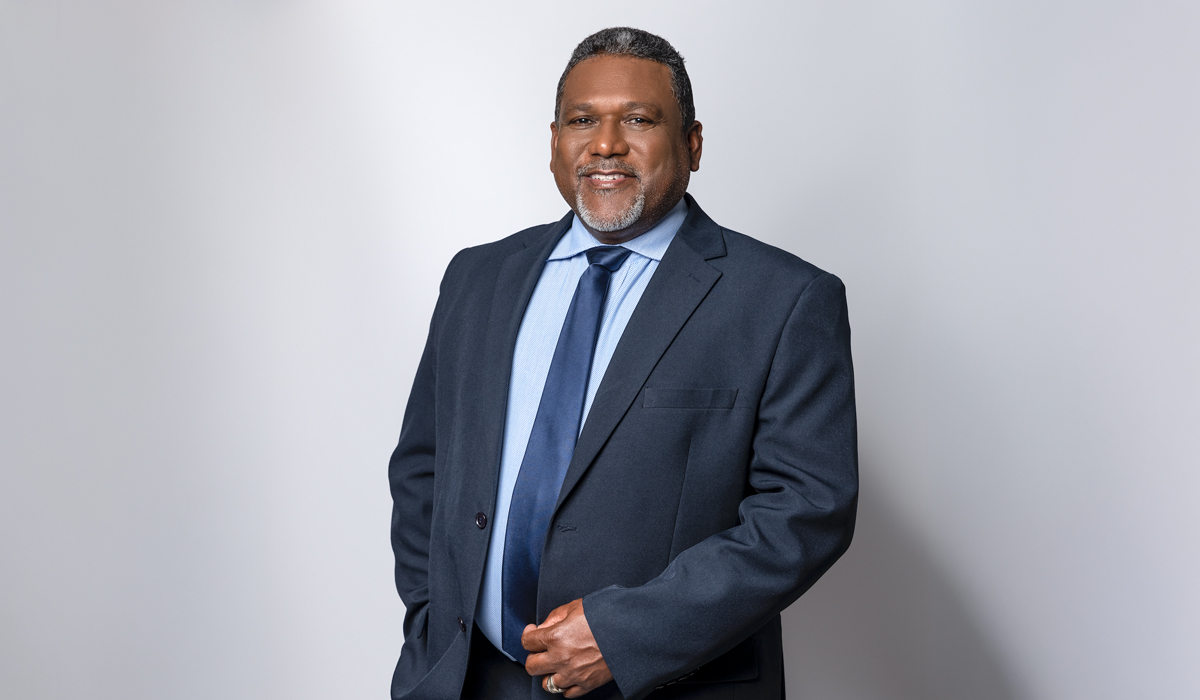
06 Jul Interview with Alain Richardson, Président Directeur Général, Semsamar, Sint Maarten
Saint Martin is currently experiencing sustained economic momentum driven by major development projects and a strong tourism rebound. Air traffic arrivals rose by 45.7%, helping fuel wider economic activity, while the IMF estimates overall growth of around 3% in 2025. What key drivers have fueled Saint Martin’s recent economic resurgence in the past five years and how have they improved the overall business climate on the island?
I will be speaking in both capacities, as CEO of Semsamar and as First Vice President of the territory. There has been a strong dynamic on the island over the past four years, largely driven by the regained confidence in the island’s resilience attractivity but also by the recovery following Hurricane Irma and the significant destruction it caused. Today, this renewed momentum is very encouraging.
It also reflects the fact that Saint Martin has always been a highly sought-after tourism destination. Once key infrastructures were repaired and upgraded, such as the port in Point Blanche, cruise tourism quickly returned to its previous peak levels. Now that the airport has been fully renovated and modernized, the island is once again welcoming a large number of tourists, with activity coming from across the globe.
Saint Martin continues to benefit from strong international appeal, with many visitors eager to discover the island and a high rate of returning guests. This has been a key driver of the current economic growth. Governments on both sides of the island have seized this opportunity to further develop the territory and respond to evolving market demand.
On our side of the island, we have implemented a policy focused on elevating the standard of hospitality. This includes hotels, guest houses and other accommodations, with a clear objective of moving toward higher-quality services. As a small territory, our strategy is not to target mass tourism, but rather to focus on niche markets that align with our positioning and sustainable development goals.
Following the COVID-19 pandemic, we have also observed a shift in demand. While there is still interest in traditional large hotels, there is a growing demand for boutique hotels, villas and short-term rentals such as Airbnb. Our territory has adapted quickly to this trend. Today, the tourism offer is more diversified, combining traditional hotel infrastructure with a growing segment of villas and short-term rental accommodations tailored to evolving traveler preferences. After Hurricane Irma, the number of hotel rooms and other accommodations diminished tremendously on this side of the island. Our objective is to reach an average of 3,500 hotel rooms.
Today, we are in discussion with many private investors who are actively working on their projects and plans, which allows me to say that in the next two to three years, there will be major investments in the hospitality sector. The quality and capacity to receive and cater to our guests will be where they should be.
Additionally, there are other areas of great activity. Following the hurricane, there has been a strong need for housing for the resident population. Irma devastated many homes and a significant number of people were uninsured. Currently, we estimate that about 3,800 units are needed to meet housing demand in the territory. Semsamar is one of the leading entities addressing this need.
Today, we have three major public-private entities that invest in, own and manage housing. These are Semsamar, which is the largest, SIG and Sikoa. From the time of Hurricane Irma up until last year, none of these entities were able to invest in building new housing; all efforts were focused on repairing and renovating houses that were partially damaged by the hurricane.
As much of the island was destroyed by Hurricane Irma, rebuilding not just hotels but local people’s housing has also been essential. What initiatives has the government pursued to encourage rebuilding?
The local government has now introduced a new impulse in housing with the “Programme Local de l’Habitat (PLH)”. Over the next six years, the objective is to build and reintroduce on the market 1,800 new housing units, an average of 300 per year. Semsamar has a major project set to begin at the end of this year, with 160 new housing units. These will cater to both rental markets for tenants and ownership markets, with close to 50 units designated as affordable ownership housing. This is crucial for the territory to provide housing for those without the means to become owners, while also meeting the demand of those who can purchase their own homes.
The construction sector is already active and will continue to grow in the coming years. A minimum of 1,200 new hotel rooms is expected to be developed over the next three to four years. This construction activity will boost the island’s construction sector overall, covering tourism, housing and public infrastructure. Key public infrastructure projects include investments in water production and distribution. On this side of the island, it is essential that supply and quality meet demand and investments in this sector are already planned for the near future.
How important is rebuilding infrastructure and presenting the island as safe and restored to the tourism industry and for foreign investors?
Energy is another major sector component of this. The focus is not only on production but also on sustainable and environmentally friendly solutions. A new electricity plant is expected to begin within the next year or two, offering a much greener alternative to the current system. The pluri-annual energy plan combines renewable energy sources, including biofuel, solar energy and the reuse of waste materials, to ensure sustainable electricity production for the island.
Although we are a sunny island in the Caribbean, it is a challenge for the government to rely solely on solar power because we are also exposed to natural disasters. Banking entirely on solar energy carries risk. If a major storm hits, solar panels and infrastructure could be devastated. That’s why the government is focused on a balanced mix of renewable energy sources to ensure the island’s needs are reliably met. Looking further ahead, over the next 10 to 12 years, there is potential to harness energy from dormant volcanoes. This plan goes beyond Saint Martin and could involve neighboring islands such as Nevis, St. Kitts and Sint Eustatius, creating a more secure, renewable source of electricity for the region.
As tourism and housing develop, issues like water production, electricity, waste management and overall infrastructure become even more important. Another challenge for a small island is traffic management. We have initiated a study, to be completed this year, to develop “Le Plan de Mobilité,” the territory’s mobility plan. The goal is to explore more integrated mobility solutions so that residents and visitors rely less on individual cars, creating a more efficient and sustainable transportation system. We are also working to create more environmentally friendly mobility solutions and improve public transportation services. Ideas being explored include using the coast and the sea for transport, such as water taxis and even telepheric options to move from Marigot to the French Quarter. Once the report is finalized, the Territorial Council will validate its Schéma de la Mobilité.
Economic development and tourism growth require attention to security. Starting this year, a policy for video protection will be implemented, including cameras in towns and on major streets, which is a crucial aspect of maintaining a safe environment.
All of this dynamic development depends on having trained and skilled manpower to fill job opportunities. Our territory is small, so many students travel to Guadeloupe, France, the United States, Canada and elsewhere for studies. The government has invested in this by doubling the scholarships awarded over the last four years to support students in their education. At the same time, we are focused on creating economic development and job opportunities to encourage students to return after studying abroad. For those who remain on the island, training institutions are in place to provide the skills needed for existing and upcoming job opportunities.
Founded in 1985, Semsamar is a mixed-economy real estate and development company that has become a central public development tool and a leading social landlord across Saint Martin and the wider French Caribbean. How would you describe Semsamar’s evolution since 1985 and its importance within Saint Martin’s social and economic development?
Semsamar celebrated its 40th anniversary last year. It was established in 1985 as a small SEM, a public-private company. The territory of Saint-Martin holds 51% and other partners include the region of Guadeloupe, the commune of Bastia, financial institutions such as Banque des Territoires and Caisse des Dépôts, as well as a few private investors. Semsamar was initially created to support the commune, which at the time faced a population surge and needed schools and other infrastructure. The commune lacked the expertise and Semsamar’s role was to guide and manage these investments.
Over the years, Semsamar has grown significantly. Today, we are active not only in Saint-Martin but also in Guadeloupe, French Guiana and Martinique, playing a major role in town planning and housing development and assisting communes, regions and other collectivities with their investment policies. Acting as an Assistance à Maîtrise d’Ouvrage, we support both public and private investors.
We have contributed to major projects such as the new medical and university center in Guadeloupe. Our largest activity today is social housing, where we build, own and manage housing for the population. We are active in both government-funded social housing and the private market, maintaining a large portfolio of properties rented to businesses in Guadeloupe and Martinique. Additionally, we have built other public infrastructure that we own and lease to governments in French Guiana and other territories. We also build and own police barracks, which support administrative activities as well as the housing of the personnel from the gendarmeries. We have invested over the years in senior citizens’ homes across various territories. We remain a major player in these four territories and are the only entity present on all four: Guadeloupe, Martinique, French Guiana and Saint-Martin.
As part of our social housing activity, we purchase large portions of property that we develop into a combination of commercial spaces, housing, administrative facilities and so on. Today, we are in a strong growth dynamic in two major territories: Saint-Martin and French Guiana. In Guadeloupe and Martinique where populations age, housing demands differ from 10 to 20 years ago. These territories remain areas of significant investment. In Saint-Martin, we support government investment policy. Housing for seniors now focuses on allowing them to remain in their homes, which requires adapting houses to the realities of aging. We continue developing senior citizen homes while addressing this trend.
In Saint-Martin and French Guiana, where demographics are dynamic (French Guiana has an exceptionallylarge young population and strong housing demand), we continue purchasing and developing properties with full infrastructure networks, which are then rented out or sold to private investors and local government entities. In Saint Martin, where demand is high, we are actively working on key properties for territorial development. One major project involves redefining the entrance into Marigot from Grand-Case. We are negotiating a major property acquisition where a new electricity plant, water plant, reshaped road network and roundabout will be established. These are major public infrastructures.
We plan to establish a technopole to consolidate activities related to the digital industry, internet and other tech-driven sectors. This technopole is a critical infrastructure project for the territory. Currently, the port lacks sufficient depth to accommodate the larger ships that operate on today’s market. The planned expansion will include a depth of approximately 25-30 feet, along with a broader commercial zone. Semsamar is a key partner in reshaping the entrance to Marigot, enabling both the development of infrastructure and the creation of commercial spaces. This initiative is designed to facilitate economic growth by providing the physical framework for business activities and relationships to flourish.
Considering Semsamar’s active role in local development, creating professional trade opportunities for youth, supporting education, training, SME integration and implementing ESG practices, how would you evaluate the current level of skills in Saint-Martin’s construction sector?
We have now accumulated 40 years of experience, which has allowed us to develop the necessary skills and expertise. The collectivity of Saint-Martin has also initiated a number of studies and implemented plans related to training. The most advanced training is delivered through what is known as l’éducation nationale. While students can complete part of their studies in Saint-Martin, many must travel abroad, to France and other territories, to pursue further education. We guide them toward sectors that are in demand locally, so they can return and integrate into the workforce.
In the construction sector, to better integrate unemployed individuals or school dropouts, we have introduced a mechanism within public tenders known as clause d’insertion. This makes it compulsory for companies awarded contracts to include a percentage of individuals in training programs. These may be unskilled individuals or skilled workers seeking employment through the unemployment agency. This approach ensures both inclusion and workforce development.
We are also working closely with the Régiment du Service Militaire Adapté (RSMA), a military-based training institution operating in Guadeloupe. While we do not yet have a full branch in Saint-Martin, an office has recently been established locally. We have secured an agreement that reserves a quota of training places for our young people. RSMA offers a catalogue of more than 30 to 40 professions, including construction trades, accounting, hospitality, mechanics, air conditioning, plumbing and electrical work, enabling participants to acquire practical, employable skills.
In parallel, discussions with investors, particularly in the hotel sector, systematically include a training component. The government supports these efforts through available funding mechanisms. As Saint-Martin is part of the European Union, we benefit from financial support, including European social funding, which helps finance training programs. Investors developing hotel projects can access these resources to train their future workforce.
This remains one of the territory’s key challenges. Investing in people and human capital is essential. The move toward higher-end hospitality requires a highly skilled workforce. With the international brands showing interest in managing these properties, we know that, beyond the foundational skills developed locally, these operators will also contribute to training to ensure that staff meet their high standards.
With Saint Martin’s strategic location between the U.S. and Latin America, what new opportunities are emerging for U.S. and international investors in Saint Martin and the wider region?
Even though it is an autonomous territory, Saint-Martin remains part of the French Republic. Over the years, France has attracted significant investment from American companies and the same advantages apply here. In terms of security, transparency and guarantees, Saint-Martin benefits from a banking system and regulatory framework that meet international standards. In addition, the territory has fiscal competencies, meaning it has control over its fiscal policy.
Saint-Martin is business-friendly for foreign investors and its banking institutions are part of the international financial system, ensuring that both funds and investments are secure. The territory offers political stability, along with social, fiscal and financial frameworks that are consistent and aligned with international norms.
Geographically, Saint-Martin is also very close to the United States, making travel and connectivity straightforward for investors and businesses. In terms of infrastructure, the water system is based on desalination, providing a reliable source of high-quality water. Electricity is produced and distributed by EDF, a leading international energy company, ensuring reliability and efficiency.
Overall, Saint-Martin presents strong potential for investors. The combination of stability, international standards, strategic location and investor-friendly policies makes the territory an attractive destination “the place to be” for investment.
You have built an extensive career across both the private and public sectors, consistently advocating for improved living standards, stronger SME development and deeper public-private partnerships. You also currently serve as 1er Vice-Président of the Collectivité de Saint-Martin. How you see the ease of doing business in Saint-Martin and how has this evolved in the last few years?
Business requires many factors, but one of the most important is confidence. Saint-Martin is a territory that offers confidence in its potential, in its political structure and in its financial sector. There is also confidence in the availability of manpower. Even when specific skills are not readily available locally, there are clear and secure processes that allow businesses to bring in part of their workforce, provided they follow the established guidelines. This openness is a key strength of the territory.
Confidence is reinforced by strong demand across sectors, particularly in tourism, where there is a continuous increase in visitors who want to come to Saint-Martin. While the territory may not yet match some neighboring islands in volume, it remains highly competitive in terms of the quality of its clientele. This is why many of the upcoming projects in the months and years ahead are focused on five-star and higher-end infrastructure. With both confidence and market demand in place, the fundamentals for investment are strong.
Stability is another critical factor. Saint-Martin offers consistent and reliable policies, which are essential for long-term investment. At the same time, the territory is actively diversifying its economy. This includes the development of the digital sector, as well as the blue economy, which encompasses activities linked to the sea such as fishing, leisure and aquaculture. In parallel, efforts are being made in the green sector to support local production. While large-scale agricultural exports are not the objective, there is a clear focus on supplying fresh local products such as fruits, vegetables, eggs, meat and fish. This supports both the local population and the high-end tourism offering. All of these elements position Saint-Martin as an attractive destination for investment.
The territory is capable of supporting and coordinating major projects in sectors such as hospitality and energy, backed by local expertise and the presence of international groups already operating on the island. These factors contribute to a strong investment environment, where businesses can operate successfully and achieve profitability, with additional advantages such as tax exemptions on dividends.
What’s your final message to our readers?
In the very unstable world where we live in, Saint Martin stands out as a haven of stability and economic growth. We are located in the Americas, close to the United States, and we are both investor-friendly and tourist-friendly. The island is highly multicultural and multilingual. While it is divided into a French and a Dutch side, English is widely spoken and many residents speak multiple languages, including French, Spanish, Creole and Dutch. This creates a welcoming environment where communication with investors and visitors is seamless.
From a financial perspective, Saint Martin operates with the Euro on the French side, while the US dollar is widely accepted across the island. This dual currency environment simplifies transactions and eliminates many of the usual exchange challenges. The presence of international banking institutions further strengthens the financial ecosystem. We are also committed to transparency and international standards. Semsamar has achieved ISO certification, reflecting our commitment to operating in a structured and transparent environment. The territory itself is also working toward similar certifications, reinforcing confidence for investors who require clear standards and accountability.
Beyond business, Saint Martin offers a unique lifestyle and cultural experience. It is widely recognized as a leading destination for gastronomy, where dining is a key part of the island’s identity and appeal. Overall, Saint Martin is open to the world and ready to welcome investors and visitors alike. The government is supportive of new initiatives and Semsamar stands ready to act as a partner in developing projects across sectors.
Sorry, the comment form is closed at this time.