
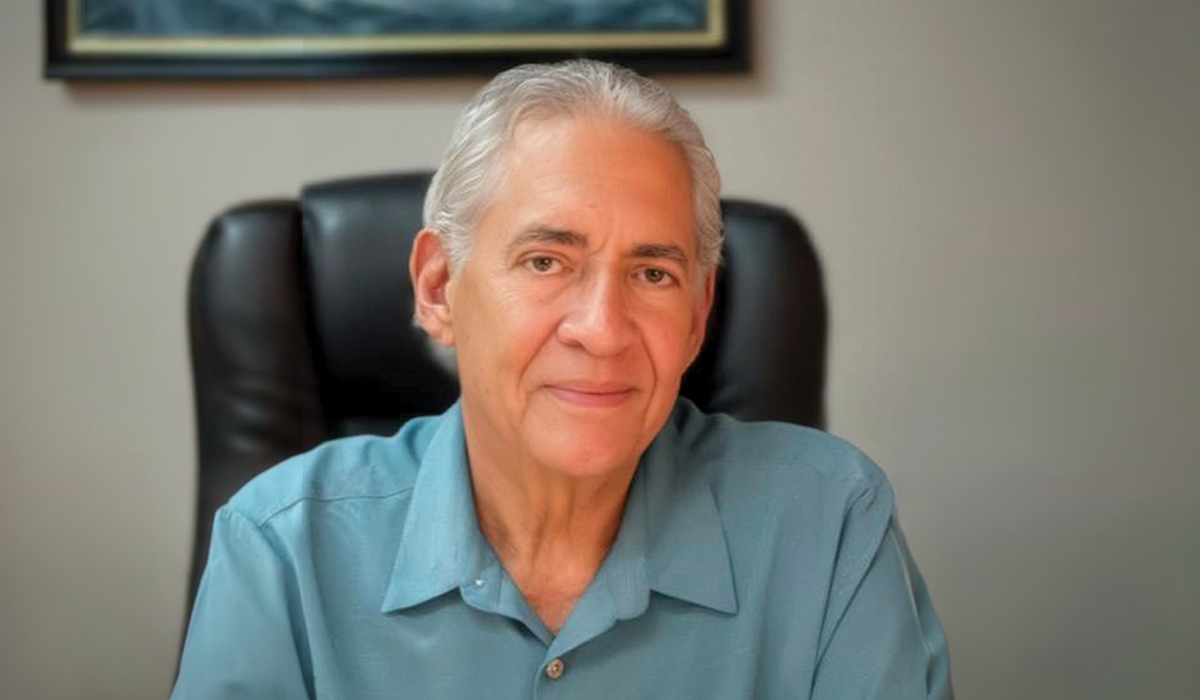
06 Jul Interview with George Pelgrim, CEO Caribbean International Maritime (INTERMAR), Sint Maarten
Saint Martin’s maritime sector continues to gain momentum, with cruise arrivals increasing by 14% in Q2 2025 and Port St. Maarten projecting 1.5 million cruise passengers for the year. Why has Sint Maarten been so successful at attracting cruise and luxury tourists over the last decade and what makes travelers increasingly flock to its shores?
Sint Maarten has achieved success by providing cruise and luxury travelers with a comprehensive and efficient destination. Over the past decade, significant investments have been made in developing a world-class port capable of accommodating the largest vessels, expanding airlift capacity and creating a diverse range of beaches, shopping venues, dining options and unique attractions such as Maho Beach. The island is recognized for its safety, hospitality, accessibility and collaborative efforts with cruise lines, local stakeholders and private investors.
This combination of one unique and strategic island divided by two countries, robust infrastructure, extensive experience and high-quality service has established Sint Maarten as one of the Caribbean’s leading tourism hubs.
How does Sint Maarten distinguish itself as a regional hub for transshipment, what sort of competitive advantages does it hold and what potential does it have to scale its role in Caribbean maritime trade?
Our transshipment hub excels due to its strategic location, deep-water port and efficient operations. Unlike other islands with heavy bureaucracy, our customs and border authorities focus solely on drug and crime control using advanced systems that do not disrupt workflow.
Sint Maarten’s proximity, skilled teams and strong shipping line support allow us to efficiently transfer cargo between main carriers and inter-island feeders. Plus, we offer full flexibility by operating 24/7/365, unlike other ports.
INTERMAR has grown from a small ship agency into one of Sint Maarten’s leading logistics firms, offering services spanning cargo handling, 3PL warehousing, inland transportation and supply-chain support. Could you outline the history of INTERMAR and how it became a central force in Sint Maarten’s logistics and trade landscape?
INTERMAR started as a small ship agency I built from the ground up 40 years ago. Starting with a limited client base, the company has developed into one of Sint Maarten’s premier logistics providers, offering comprehensive services in port stevedoring, cargo management, warehousing, inland transportation and supply-chain solutions. The major turning point came in 2001, when the port expanded to accommodate larger container vessels. This opened the door for bigger ships, both for local cargo and for transshipment, and the sector began to grow.
Our strength has always been our people. Many of my staff have been with me for decades and together we have built a long-term partnership that helped us become a key part of the island logistics network. Celebrating our 40th anniversary with Prime Minister Luc Mercelina reminded me how far we have come and how important our role is to the country. Looking ahead, we will continue to modernize and expand our services so that Sint Maarten can strengthen its position as a local and regional maritime hub.
How is the company accompanying new market trends and developing new services in line with these new market trends?
INTERMAR keeps pace with new market trends by investing in modern technology, expanding our 3PL facilities, port and inland transport services and developing solutions that give customers faster, more transparent logistics. We are also enhancing our digital port and cargo management and services for e-commerce and regional transshipment. Staying flexible and innovative is what keeps us competitive after 40 years.
Today, INTERMAR is one of the island’s largest distribution hubs for all online retailers. We work directly with U.S. companies and anyone on the island can order online and receive their products within a week. Once shipments arrive, customers can collect their packages the next day. As online shopping grew, we built a dedicated facility to handle this volume and support consumers. While other islands often wait up to 10 days due to their bureaucracy and tariffs, our streamlined process allows a next-day availability.
INTERMAR is a key partner in the ongoing expansion of critical maritime infrastructure in Pointe Blanche. Port St. Maarten is also rolling out major sustainability upgrades, including fleet electrification, EV integration and exploring waste-to-energy and shore-power solutions. What major expansions have taken place at Sint Maarten’s ports to meet the surge in cargo and visitor traffic in recent years?
The first key factors are infrastructure, equipment and manpower. The Port Authority recently invested in a new multimillion-dollar port crane to improve vessel operations. Our port expanded from one shore crane to three modern, state-of-the-art cranes. From our side, we continue to invest in all necessary port equipment such as container reach stackers, top loaders, forklifts, yard mules and container trucks to meet growing demand. We are in the process of building a premium public self-storage facility for the community. In the port business, constant upgrades are essential.
How has INTERMAR positioned itself at the forefront of digital transformation in local logistics and which new technologies are making the biggest impact on operations?
We are currently in discussions with major port software providers and our goal is to fully digitalize our operations in line with leading ports worldwide. The technologies that are having the most significant influence are the internet of things and fleet telematics for live tracking and predictive maintenance, transportation management systems and warehouse management platforms that automate planning, routing and inventory, AI/analytics for demand forecasting and smarter last-mile delivery and fleet electrification and low-emission equipment to cut costs and emissions. Our goal is to have tighter control of operations, fewer delays, and better customer experience.
Intermar is actively supporting Sint Maarten move toward net zero by modernizing our operations and reducing our environmental footprint. We have already begun transitioning to electric and low emission equipment optimizing vessel and cargo efficiency management and investing in smarter yard management to cut fuel use.
How would you describe the current level of expertise within Sint Maarten’s maritime logistics sector and what steps are companies like INTERMAR taking to train and prepare the next generation of workers?
In recent years, we have prioritized training. We have trained our dock workers, warehouse staff and equipment operators. We are actively sending our mechanics abroad to learn how to manage the new, more advanced port equipment. Skilled workers are hard to find, so we focus on developing local talent. We recruit young Sint Maarteners, train them on the job and either bring in trainers or send them abroad for specialized training. This is our system and we are committed to building the next generation of port professionals.
Our organization has established itself as a community supporter through partnerships, volunteer work and youth and social program support. Recent CSR initiatives include working with the Rotary Club of St. Martin Sunrise, donations to education and community projects and active involvement in programs for local families. We prioritize supporting children, recently funding a school breakfast program with Rotary and remain committed to Sint Maarten’s development, especially for its youth.
How important is economic diversification in Sint Maarten, for the continuous development of the island and to stop the brain drain?
Economic diversification is essential for Sint Maarten. The island’s dependence on tourism leaves it exposed to disruptions, while limited job choices cause talented young people to move elsewhere. Expanding industries such as logistics, technology services, renewable energy and professional training can foster steady, year-round employment, bring in investments and help local professionals build their futures on the island. Diversification is an effective way to strengthen the economy and reduce brain drain.
Sint Maarten’s economy is very much tied to the United States. Roughly 60% of the island’s imports originate from North America and Sint Maarten is expanding its role as a hub for U.S.-driven trade. How significant is the U.S. market to INTERMAR’s operations and what is being done to strengthen ties with American cargo and logistics partners?
The U.S. market is vital to INTERMAR, providing most of our inbound cargo and consolidation. We are enhancing partnerships with U.S. carriers and forwarders, boosting digital visibility and expanding 3PL and hub capabilities to make Sint Maarten a stronger gateway for U.S.–Caribbean trade.
How would you assess the ease of doing business in Sint Maarten for both local entrepreneurs and U.S. investors looking to enter the market?
Sint Maarten offers a relatively business-friendly environment, with an open economy, a strong tourism base and no restrictions on foreign or local ownership, so investors generally find it easy to enter the market. The overall climate is welcoming and accessible. In short: good opportunities, especially for service and logistics businesses, with room to improve on efficiency and administrative processes.
Shipping lines or logistics companies interested in operating in Sint Maarten can contact us for guidance, needs assessment, and feasibility advice.
As one of Sint Maarten’s foremost business leaders, you have played a decisive role in shaping the island’s maritime economy and elevating its visibility on the global stage. What do you hope to accomplish in the next 2 to 5 years and what is your long-term vision for the company and for Sint Maarten’s development?
We are always focused on growth, aligned with the island government’s infrastructure upgrades, including roads and the port. Increased real estate and population growth will boost business, as most construction passes through the port.
Over the next 2 to 5 years, my focus is on strengthening INTERMAR’s role as a modern, tech-driven logistics leader while expanding the services we offer across the region. That means deeper digitalization, more efficient 3PL and warehousing capabilities and continued investment in people so our team grows with the industry.
Long-term, my vision is twofold: for INTERMAR: to become the most reliable, innovative logistics partner in the Northeastern Caribbean, known for service quality, community impact and developing local talent. In short, sustainable growth for the company and a stronger, more balanced future for the island.
What is your final message to the readers of the Los Angeles Times?
Sint Maarten is a growing island with remarkable potential with unique cultural advantages. Investors are welcome and opportunities remain for anyone and at Intermar we are committed to innovation, sustainability and building the next chapter of regional connectivity. We welcome all who want to grow with us and be part of this island’s paradise success.
Sorry, the comment form is closed at this time.