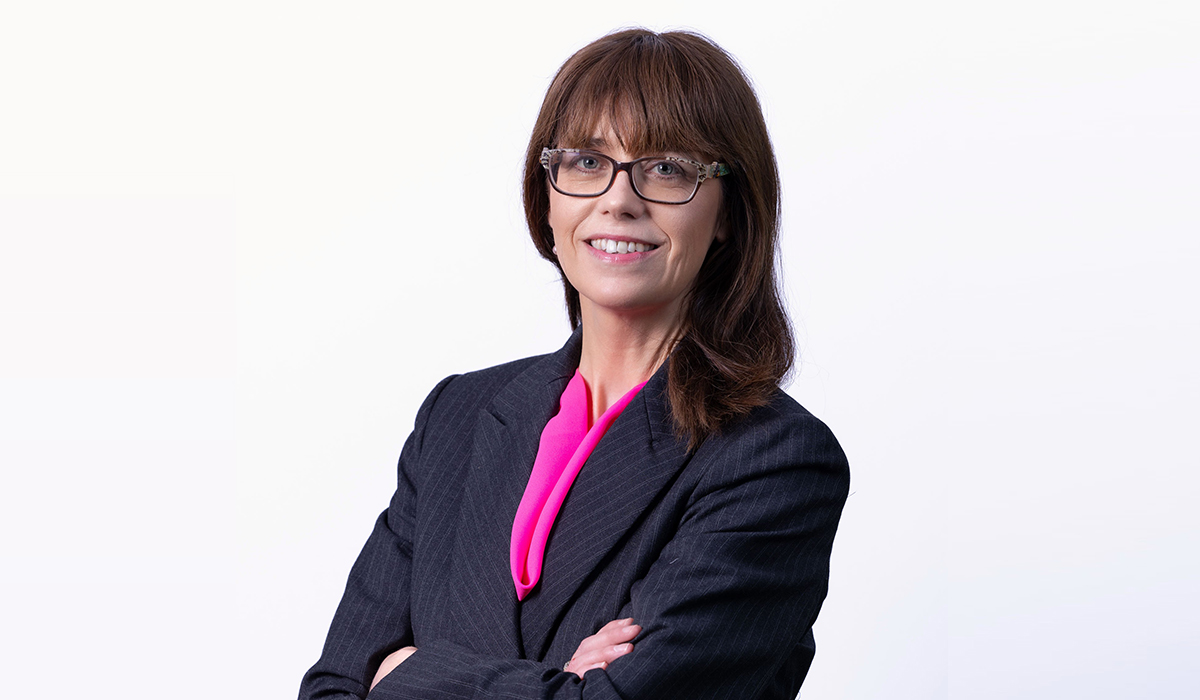
18 Oct Interview with Jennifer Melia, CEO Enterprise Ireland
Ireland has recorded remarkable economic growth over the past decade, with GDP expanding by almost 5% in 2025. As the country advances its National Development Plan 2026–2035, industrial diversification, infrastructure investment and innovation are central to a long-term strategy aimed at strengthening competitiveness and regional development. How has Ireland distinguished itself globally through its economic diversification and development of high-growth sectors such as deep tech, life sciences and green energy?
Ireland has a strongly pro-business environment. Enterprise Ireland, established in 1998, supports the growth of Irish indigenous exporters and it is our long-term ambition that Irish exporters will become the primary driver of the national economy. Our work focuses on four main priorities. First, helping companies become more innovative and competitive. Second, building strong leadership and management teams to support scaling. Third, ensuring companies stay ahead of rapidly evolving technologies. And fourth, driving an export-first mindset from the earliest stages, so Irish companies are prepared to compete globally, not just domestically.
We see strong growth in sectors such as High-Tech Construction and Irish-owned companies are becoming key components in the supply chain for critical digital infrastructure globally. In fact, we saw a 24% increase in exports from our High Tech Construction companies in 2025. Another sector with continued growth here is food and drink. This is a long-established industry, but over the past 20–30 years it has been transformed through technology — from automation on the production line to the increasing use of AI across operations, including back-office functions, leadership and board-level decision-making.
At SelectUSA, Ireland had the largest European delegation — remarkable for such a small country. It highlighted the strength of a number of our sectors, including our High-Tech Construction firms, many of which are now expanding into the U.S. These companies bring with them a strong ethos from Ireland: creating high-quality jobs that support both living standards and local communities. In the 1980s and 1990s, Ireland attracted significant U.S. foreign direct investment, particularly in technology, drawn by a strong pipeline of science, technology, engineering and math (STEM) talent. I was part of that talent pipeline myself through my STEM studies at the time. That period became a foundation for knowledge transfer, with Irish and American companies and people moving between sectors and building new businesses. Many of those early ventures have since scaled into global Irish companies, now competing internationally, including in the U.S. Today, that history underpins a strong, trusted transatlantic innovation corridor, where U.S. companies and Irish firms work closely together, particularly across advanced manufacturing and technology supply chains.
As Ireland’s supply chain expands globally, the U.S. remains a critical market. In 2025, North America was the third largest global market for our client companies, with their exports there growing to €7.34bn. Irish companies are now among the top five foreign investors in the U.S., with approximately $389 billion invested and over 125,000 people employed by the top 10 Irish firms there. This success has not happened overnight — it reflects a 30–40 year journey. A key foundation has been sustained investment in talent. Ireland places strong emphasis on education and is the largest producer of STEM graduates per capita in Europe, as well as the second largest source of female STEM graduates. Equally important is inclusivity, ensuring the full talent pool is developed and harnessed to its full potential. Another strength is ecosystem connectivity. Through a “Team Ireland” approach, Enterprise Ireland works closely with government departments, including our parent department in the Department of Enterprise, Tourism and Employing, higher education institutes, to support funding, startups, and scaling.
Ireland is also one of the highest per-capita investors in tech startups. Data published by PitchBook shows that Enterprise Ireland was the most active venture capital investor in Europe by deal count in 2024. Overall, Ireland plays to its strengths — focusing on talent, agility, resilience and a clear, long-term strategy for international growth.
Ireland’s Impact 2030 strategy aims to raise research and development investment to at least 2.5% of the domestic economy by 2030. Where does Ireland hold its strongest advantages when it comes to R&D and how closely are research institutions being linked to business and industrial development?
A key priority in our Enterprise Ireland strategy is increasing R&D investment among Irish companies. A major strength in Ireland is our talent base and our strong track record in industry–academia collaboration. This includes SMEs and multinationals working closely with third-level institutions to maximize knowledge transfer and innovation. We place strong emphasis on applied and commercial research, ensuring universities focus not only on fundamental science, but also on solutions closer to market. Enterprise Ireland plays an active role in this ecosystem, with dedicated staff working directly with universities as a bridge between industry and academia. This creates a two-way “push-pull” dynamic: bringing technology out of universities while feeding market insights and customer needs back in, helping research become more commercially relevant.
The “Team Ireland” approach also brings close alignment with Research Ireland, which focuses on world-leading fundamental research. This ensures we are addressing both immediate industry needs and the longer-term technologies Ireland will rely on in 2030, 2035 and beyond. Over the past 30–40 years, Ireland has built clear areas of strength, including medical devices, fintech innovations, enterprise solutions and nutrition. Today, Ireland is among the leading countries in Europe for fintech startup support. This model is proven, but it depends on strong coordination across the ecosystem — avoiding duplication and working in sync. The shared goal is clear: delivering high-quality, innovation-driven jobs in Ireland.
How is the ease of doing business in Ireland and how is it evolving today in response to recent pressures on businesses, including rising energy costs, inflation and shifting export markets?
Over the past decade, Irish companies have had to navigate a number of global economic shocks and, in the process, significantly strengthen their resilience. Since 2008, they have come through the financial crisis, Brexit, COVID-19 supply chain disruption, the war in Ukraine and rising energy costs. Each of these events required companies to adapt quickly — focusing on competitiveness, market diversification and stronger scenario planning. They built their own playbooks in-market, while Enterprise Ireland supported them with strategic and targeted measures. This included financial support to help companies retain key management and technical teams, ensuring continuity through periods of uncertainty. It also meant strengthening cashflow resilience, supply chain expertise and access to external specialists.
A key priority has been enabling companies to plan and mitigate the impact of new challenges and scenarios rather than trying to predict outcomes and to respond quickly as conditions change. Our network of 42 international offices play a critical role in this, providing real-time market intelligence and supporting companies as they enter new markets or deepening relationships and strengthening opportunities in existing ones. Exports from Irish owned companies supported by Enterprise Ireland increased by 8% in 2025, reaching €38.86bn — a new record for the Irish enterprise base — and the U.S. remains a leading market for Irish digital technology, fintech and life sciences companies.
SMEs remain the backbone of Ireland’s economy, supporting more than 1.2 million jobs nationwide. Enterprise Ireland is intensifying its support for entrepreneurship and scale-ups, with a target of creating 1,000 new startups between 2025 and 2029 and the launch of its new Startup Ireland initiative in May. How would you assess the support available to startups and SMEs in Ireland from early-stage formation to international expansion? How does the country compare with other European markets in this regard?
SMEs are a significant cohort of Enterprise Ireland’s client base, reflecting the broader European landscape. We place strong emphasis on startups, supporting them directly and investing in seed and venture capital funds to attract additional private and international capital. We also invest heavily in leadership development across both startups and scaling companies. A key initiative is our Leadership for Growth program, which combines executive education with peer-to-peer learning. Feedback from companies consistently highlights it as a major driver of growth, particularly through shared learning with more advanced scaling firms.
Under StartUp Ireland, we are increasing our focus on regional and sectoral accelerators to support entrepreneurs across all parts of Ireland, not just major urban centres. In some industries — particularly highly regulated ones — sector-specific networks are especially valuable, bringing together entrepreneurs facing similar challenges. A key priority is ensuring a strong funding pathway, through Enterprise Ireland, seed and venture capital funds, the banking system where appropriate and the Irish Strategic Investment Fund. In several cases, we co-invest with the Ireland Strategic Investment Fund and international partners, combining funding with strategic expertise to support rapid global scaling. This is particularly important in fast-moving areas such as AI and quantum computing, where companies need both capital and specialist support to scale at pace. It reflects the “Team Ireland” approach in action — aligning resources across the ecosystem to back high-potential companies and drive international growth.
The USA remains one of Ireland’s closest and most important markets for trade and business export. On a per-capita basis, Ireland is the largest investor in the USA of any country. In May, more than 50 Irish companies attended the SelectUSA Summit in Washington. What impact have Enterprise Ireland’s trade delegations and events had in deepening transatlantic commercial ties?
Our trade missions provide two-way opportunities. Events such as SelectUSA bring Irish companies directly into the U.S. market and this year more than 50 client companies joined us. This followed closely after our St. Patrick’s Day program, which included a multi-city mission across the U.S. I was in Austin at South by Southwest and this included Minister Robert Troy, before continuing to Washington, D.C., while colleagues led missions in New York, Chicago and Miami. Interest in the U.S. has been strong and more than 100 Irish companies entered the market in 2024 and 2025. The U.S. remains a leading destination for Irish digital tech, fintech and life sciences firms.
We also operate seven offices across the U.S., reflecting how we view it not as a single market, but as multiple regional ecosystems with different sectoral strengths and talent bases. This local presence is critical in helping companies establish operations and connect with state and regional development agencies. SelectUSA was particularly valuable in that respect, bringing development agencies together in one place so companies could directly assess where talent pools and sector strengths align with their needs when expanding into the U.S.
To grow business further in the U.S., we also bring U.S. buyers to Ireland. We regularly host focused, short visits for groups such as cybersecurity buyers, where we showcase leading Irish companies and technology solutions. This gives U.S. buyers direct access to firms and creates an efficient way to explore partnerships — effectively a “reverse SelectUSA.” We also engage with major U.S. food and drinks companies seeking automation and AI solutions. Many are increasingly interested in Ireland because they can see how these technologies are already being successfully deployed here. They recognize that Irish companies are developing solutions that can help address their own operational challenges.
How is Enterprise Ireland helping client companies adopt digital technologies, and what successes are emerging from these efforts?
At Enterprise Ireland, we use a trusted playbook built over many years, including since the 2008 financial crisis, with a strong focus on competitiveness and capability building. A key element is helping companies understand what is possible, supported by strong peer-to-peer learning. Companies don’t just learn from Enterprise Ireland, they also learn from peers within and across sectors, which often reveals valuable cross-cutting technologies and insights. We then help companies take action by combining targeted support with external expertise to get early implementation underway. From there, we scale quickly rather than following a linear path, meeting companies where they are on their journey. Today, digital transformation and AI adoption are top priorities, from small pilot projects to large-scale initiatives such as AI centers of excellence announced by companies like Fenergo, including 300 new jobs in Dublin.
Ireland has a strong talent pipeline across both advanced technology and traditional industries. For example, Kerry Foods, a leading food company providing innovative ingredients and sustainability solutions, has established a centre of excellence in Ireland that supports its manufacturing operations globally. This reflects the strength of Ireland’s food-tech and AI talent base, which enables companies to scale innovation and drive execution across international operations.
Enterprise Ireland is also playing a major role in helping companies decarbonise and adopt circular business models. What support mechanisms are available through initiatives such as Ireland’s Green Transition Fund and how is Enterprise Ireland helping businesses navigate this shift?
Digitalization and sustainability are both strongly supported by government-led initiatives in Ireland. In recent years, a €300 million fund has been introduced through the Environmental Aid Scheme to help companies decarbonise, reduce reliance on fossil fuels and strengthen energy security through greater use of renewables. This focus has also helped develop a strong Irish supply chain in energy technologies, including grid balancing, solar and battery solutions — many of which are now being exported globally.
At the same time, large-scale decarbonisation projects are creating opportunities to further develop these innovative capabilities. For example, Diageo has opened a new sustainable brewery in County Kildare using advanced energy-efficient technologies, while also upgrading its historic St. James’s Gate facility in Dublin, which dates back to 1798. The site is being decarbonised while maintaining full production of Guinness, demonstrating how heritage operations can be transformed through modern sustainability solutions.
You are celebrating your first anniversary as CEO of Enterprise Ireland. What long-term vision do you have for Enterprise Ireland and the future of indigenous enterprise in Ireland? What sort of footprint would you like to leave in the organization?
My ambition, leading a team of 900 across Ireland and internationally, is to work with Irish indigenous exporters to realise the ambition that they will become a primary driver of the Irish economy, which will help to strengthen its resilience. A second priority is delivering 1,000 new startups, many of them tech-led, bringing innovative and fast-growing companies — particularly in AI — to market more quickly. Third, we work closely with companies on competitiveness, productivity, and profitability so they can reinvest in innovation, talent and skills. This creates a flywheel effect that supports scaling and ultimately positions Irish companies as global leaders and major investors in markets like the U.S. Companies like Aerogen — a global leader in pulmonary healthcare — and Mbryonics, a leader in satellite communications, show how Ireland can develop world-class firms from the startup stage.
At the core of this is creating high-quality jobs across Ireland, supporting a strong standard of living and enabling people to work and live locally. As Irish companies expand abroad, they carry these values with them. This also shapes how they operate internationally: building long-term, trusted partnerships rather than transactional relationships, embedding themselves in local supply chains and contributing positively to local communities.
What is your final message to LA Times readers?
For businesses looking to understand and adopt the next wave of technology at pace, my message is simple: look to Ireland. We have proven technology solutions and enterprise capabilities ready to deploy and our seven U.S. offices can help identify and connect companies with the right Irish partners. For U.S. entrepreneurs considering expansion into Europe, Ireland offers a pro-business, pro-startup and scaling environment. Our key strength is talent, supported by a strong, can-do culture focused on problem-solving and customer impact. This mindset is what Irish innovators bring to every partnership and market we enter.
Sorry, the comment form is closed at this time.