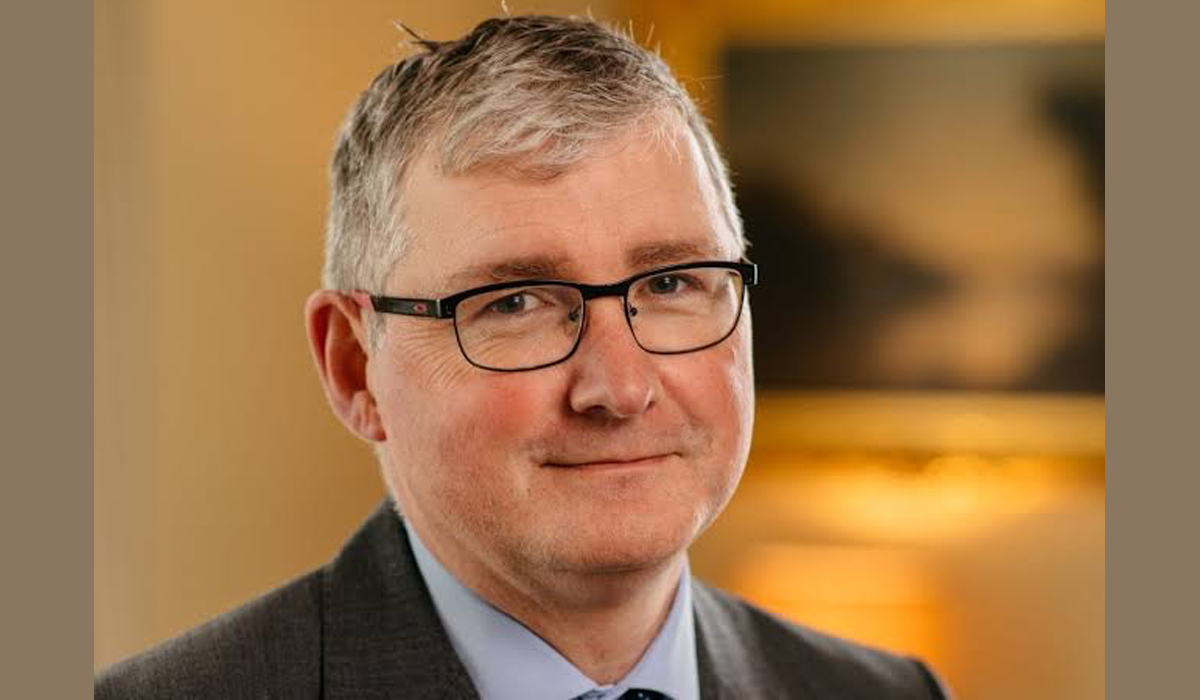
18 Oct Interview with Shane Kilcommins, President, University of Limerick (UL), Ireland
Ireland’s tertiary sector punches above its weight globally, with all Irish universities appearing among the world’s top 800 institutions in the QS World University Rankings for the first time in 2025. What factors have helped Ireland build one of Europe’s most respected higher education systems and where does the country stand out internationally?
Ireland has seven traditional universities within the IUA system. The oldest, Trinity College Dublin, dates back to the 1600s, following the Oxford and Cambridge model, when it was the only university in the country. In the 1840s, under Queen Victoria, a group of new universities was established: Queen’s University Belfast, University College Dublin, University College Cork and University of Galway. For much of this period, access to higher education was limited. Until 1967, secondary education in Ireland was not free and the country remained largely rural and agrarian. As a result, university participation was low. A major turning point came in 1967 with the introduction of free secondary education. This opened access on a much wider scale and marked the real beginning of the democratization of education in Ireland. As demand grew, two new universities were founded: the University of Limerick in 1972 and Dublin City University shortly after. Together, these form the seven traditional Irish universities we have today.
Since then, expanded access to education has transformed Ireland’s talent base and created a strong pipeline of students who previously would not have had the opportunity to progress to university. Shannon was Ireland’s first model town, created in the 1960s alongside the development of Shannon Airport and its industrial zone. It attracted major international companies, particularly from the United States and became a symbol of modernity, progress and economic opportunity. A photographic archive of 250,000 images in our library captures this transformation — from a largely rural society to one engaging with industrial and technological change. This period coincided with Ireland’s deeper integration into Europe, which significantly expanded economic opportunities.
From the outset in 1972, the University of Limerick worked closely with industry, particularly companies based in Shannon, by asking what skills they needed. This shaped early programs in areas like electronic engineering, materials science, aeronautical engineering, European studies and business-related disciplines such as marketing. In this way, universities outside Dublin became closely linked to regional development, helping align education with industry and national economic needs. When our first graduates came out in 1976, in fields like European Studies and Electronic Engineering, many were still emigrating to Europe, the UK and the United States. Ireland was still an underdeveloped economy and even into the 1980s unemployment was very high. It was only around the mid-1990s that a major turning point occurred, when the economy began to grow rapidly and opportunities started to emerge at home. Universities played a key role in that transition, alongside foreign direct investment. Today, Ireland remains a small open economy and talent is still the main reason companies invest here — more so than even tax considerations. What is striking is how recent this transformation is. It is really only one generation old, which explains the strong cultural emphasis on education among those who lived through it. That emphasis is now gradually easing as each new generation grows up with different expectations. Ireland’s EU membership, strong links with the United States, English language advantage and stable legal and political system also helped create the conditions for this success.
Ireland’s Impact 2030 strategy aims to raise research and development investment to at least 2.5% of the domestic economy by 2030. What role do universities play in achieving these goals and how are they helping move research from the lab into industry?
Traditionally, universities focused on research for its own sake. But as Ireland has developed into a knowledge economy in just one generation, that model has changed significantly. With limited natural resources and no large traditional manufacturing base, Ireland’s economic strength has come from high-value, knowledge-intensive industries. As a result, universities are now expected not only to produce research, but to translate it into real-world impact. We now see a full pipeline from undergraduate and master’s education through to PhDs, with many graduates moving directly into industry rather than academia. Strong collaboration with companies in sectors like semiconductors, pharmaceuticals, medical technology and software has become central. There is also a growing focus on commercialization — spin-outs, industry partnerships and support from bodies like Enterprise Ireland and the IDA.
At the University of Limerick, for example, key strengths include energy, materials science, pharma, software engineering and health research, particularly cancer and aging. The emphasis is on building critical mass in these areas and ensuring research delivers measurable societal and economic impact. In Ireland’s Midwest, particularly Limerick, the university has acted as an important anchoring force, helping to attract and sustain industry in the region. Companies such as Verizon, Eli Lilly, Analog Devices, Johnson & Johnson, Regeneron and Northern Trust all have a strong presence here, largely because of the local talent pool.
A key part of this relationship is cooperative education, where students spend time working directly with industry partners. This ensures continuous engagement around skills, workforce needs and future development. Increasingly, the relationship goes beyond talent to include research collaboration, especially in pharma, biopharma, software engineering and health sciences. We are focused on building integrated ecosystems where universities and industry work closely together. Because the region is relatively small, engagement is very direct. We regularly meet with company leaders, including visiting CEOs, to understand their needs and adapt accordingly. Accessibility and openness are central to how we operate — very much a system where the “book is open and the gates are unbarred,” to borrow Seamus Heaney’s phrase.
The University of Limerick has grown into one of Ireland’s leading research-led institutions, serving more than 18,000 students, widely recognized for its strong student experience and industry engagement. Can you give readers of LA Times an overview of UL’s, its position, its evolution and the values that continue to define the university today?
The University of Limerick is the first university established in Ireland since the foundation of the State. Unlike older institutions such as Trinity College Dublin, it represents a modern model of higher education closely aligned with industry and employability, reflecting Ireland’s shift from an agrarian society to a knowledge economy. From the outset, UL adopted a strong focus on industry engagement, based on the model of Northeastern University in Boston and its cooperative education system. With strong links to Shannon and the presence of multinational companies, the university developed this approach on a “blank canvas,” including a distinctive 380-acre campus with a more international, open design. Every undergraduate student completes an eight-month industry placement, alongside opportunities such as Erasmus exchanges across Europe. This strong focus on work-integrated learning has shaped a global alumni network of over 140,000 graduates.
The university’s main strength was originally in engineering and science, driven by employability needs. More recently, health sciences have grown significantly, becoming a major area of teaching and research alongside engineering and science. The remaining two faculties are Arts, Humanities and Social Sciences and Business. A key strength of the University of Limerick is employability, with around 97% of graduates entering employment. We also see ourselves as a civic university. The campus is open to the public as a park, with sports facilities, walking routes and an arboretum, reflecting our commitment to accessibility for the wider region.
Cultural engagement is also central, with the largest public art collection outside Dublin — over 2,000 works by 1,000 artists — freely accessible to all. This reflects our civic origins and the strong regional mandate behind the university’s creation. Internationally, UL is ranked among the top young universities globally and recently placed within the top 400 in the QS rankings — its highest position to date. For a relatively young institution, this reflects steady progress. Overall, employability, civic engagement, innovation and the commercialization of research are the university’s key distinguishing features.
In October, UL opened its new €34-million Student Centre. What major milestones has the university achieved in expanding its infrastructure and what future projects are planned to transform teaching, research and student life?
Our most recent project is the new Student Centre. Alongside the refurbished Glucksman Library, it reflects how learning spaces have evolved toward more collaborative, flexible environments, with a mix of quiet and group study areas. On our 380-acre campus, we have developed a central “learning corridor” linking the library, student centre and student support services as key anchor points. Campus planning has been a major priority in shaping how students move through and experience the university.
Looking ahead, a major focus is health sciences. We have recently secured accreditation for undergraduate medicine, building on our established graduate entry program. We are now expanding significantly in this area, with plans for around 2,000 students across medicine and allied health disciplines. We are also continuing to invest in student accommodation over the next five years to support this growth and ensure the campus can meet future demand. Sport is one of the University of Limerick’s key strengths, alongside a strong focus on the overall student experience and what we call “pedagogies of transition” — supporting students as they enter university, particularly in the first seven weeks and as they move toward graduation and employment. We place strong emphasis on transversal skills such as volunteering and civic engagement. Around 850 students volunteer across the region and we actively recognize and reward this contribution as part of our civic university mission.
Employability remains central, supported by continuous curriculum development and upskilling. Next year, we are launching four new programs: undergraduate medicine, speech and language therapy, a degree in law and cybersecurity — the first of its kind in the country — and Immersive Biosciences (I-BIO), developed with industry partner Eli Lilly. These programs reflect our close collaboration with industry and our commitment to aligning education with regional and national needs.
Universities are increasingly acting as engines of economic development by creating new businesses, developing talent and promoting inclusion. At UL, entrepreneurship is supported through initiatives such as the Nexus Innovation Centre, which provides incubation and scaling support for startups and emerging companies. How has UL established itself as a launchpad for startups and entrepreneurs and which emerging ventures should we be watching?
Ten years ago, success in universities was measured mainly by research outputs such as citations and funding. Increasingly now, the focus is on building an ecosystem: developing talent, growing PhD output and ensuring graduates move into both academia and industry. A major priority is the commercialization of research. At present, we have around 12 active commercialization projects working with Enterprise Ireland and regional industry partners, as well as two spin-outs launched in the past year. We are also expanding entrepreneurship initiatives, including programs like CreateHER for female founders and a “commercially curious” program engaging around 60 participants.
This mindset is now embedded in teaching as well. For example, the Immersive Software Engineering degree, developed with industry, includes a strong innovation and commercialization component, ensuring students graduate with entrepreneurial skills as well as technical expertise. Alongside this, we actively build the wider innovation ecosystem through events, industry engagement and initiatives such as the Nexus Innovation Centre, which connects students, researchers and national business partners around new ideas and opportunities.
Earlier this year, UL launched its Changemakers campaign to recruit researchers. How is the university attracting, developing and retaining academic talent today?
The University of Limerick is focusing on building critical mass in key areas such as health sciences, pharma, biopharma and software engineering. The aim is to strengthen existing strengths by attracting leading researchers, securing funding, deepening industry partnerships and developing PhD talent. This ecosystem approach links research to outcomes — through commercialization, spin-outs and collaboration with industry. Initiatives like Changemakers support this by embedding innovation across the university. Alongside traditional metrics such as citations and research funding, we also track PhD and postdoctoral output, industry engagement and, most importantly, real-world impact. That impact is seen in strong partnerships and formal agreements with major companies such as Edwards Lifesciences and Regeneron, where research is increasingly translated into practical applications.
Digital transformation and sustainability are reshaping higher education. How are digital technologies changing teaching, learning and university operations and how is UL balancing innovation with responsible implementation?
When I was a student in the 1990s, lectures were largely passive — you sat in a hall, took notes and had limited opportunity for discussion or deeper engagement. Today, pedagogy has shifted toward “teaching for understanding,” where the focus is on helping students actively engage with concepts rather than simply receiving information. That involves far more interaction between lecturers and students.
Looking ahead, especially with AI and digital tools, we are moving toward “scaffolding for understanding”where students are supported to build knowledge themselves, with AI providing additional guidance and 24/7 learning support. This requires rethinking curriculum design so that AI and digital tools are embedded responsibly and with integrity. At the University of Limerick, we have an AI task force looking at both teaching and research applications. We are also strengthening digital skills through platforms like Brightspace, expanding modules in areas such as AI and machine learning and ensuring alignment with industry needs.
A third important change is assessment. Traditional essays and take-home assignments may no longer reliably demonstrate learning outcomes, particularly with the rise of AI-generated content. As a result, assessment methods are evolving. We are seeing more use of collaborative work, oral exams or in-person assessments, MCQs and exams completed under supervised conditions. The key is to align assessment with learning outcomes and ensure genuine demonstration of competency. Rather than relying on long-established formats like essays and end-of-year exams, universities need to redesign assessment strategies for a digital and AI-enabled environment. This includes a better balance of formative and summative assessment, often supported through digital platforms, while maintaining academic integrity.
UL was recently ranked among the world’s top 15 universities in the UI GreenMetric World University Rankings. How has sustainability become embedded across the university’s operations and why does it stand out as one of the world’s most sustainable universities?
It begins with our campus itself: a 380-acre site on the banks of the River Shannon, one of the most scenic university campuses in Europe. The university was carefully planned to preserve green space and create an open, sustainable environment. Sustainability is central to our strategy, with ongoing decarbonization and energy-efficiency projects led through our estates function. We also have a strong research base in sustainability and energy. We are also embedding sustainability across teaching and learning, supported by our Centre for Teaching and Learning, with modules available at undergraduate and postgraduate level and advanced research at master’s and PhD level.
Beyond environmental sustainability, we place strong emphasis on governance and human rights. A major example is our partnership with national policing training in Ireland, where all recruits are trained and accredited through the University of Limerick, with a strong focus on human-rights-led policing. Over 5,000 trainees have completed this program. We are strongly committed to Athena SWAN principles and to gender equality across all areas, including recruitment, promotion and wellbeing, with continuous monitoring of staff data.
More broadly, inclusion and diversity are central to the university’s mission. We have high participation from students with disabilities and from lower socioeconomic backgrounds compared with national averages, reflecting our role as a regional university creating life-changing opportunities. A student can come from a small rural village and access a high-quality degree, often with cooperative education placements in major multinational companies and go on to work in Ireland, Europe, the UK or the U.S. Access, participation, equality and inclusion are not just values for us — they are central to what the university does.
Ireland’s higher education sector remains strongly outward-looking, with record international enrolments in 2025. UL hosts more than 3,300 international students and operates Ireland’s largest Erasmus+ programme. How has UL benefited from these international enrolments and what is the university doing to raise its profile in the USA?
We introduced Ireland’s first European Studies degree, combining language learning, international experience and engagement with Europe. In the 1970s and 1980s, most students were from the local region and many emigrated after graduation. From the mid-1990s onwards, that began to change and in recent years we have seen more graduates choosing to stay, particularly along the Atlantic corridor, as opportunities have developed locally.
Internationalization has become a major strength. We host around 400–500 U.S. students at any one time, alongside significant numbers from across Europe. The campus is particularly attractive to them because it is safe, self-contained and well-resourced, with strong sports, social and student support facilities. We have also strengthened recruitment in the U.S. and students are drawn by cultural familiarity, accessibility and strong value for money. At the same time, European students benefit from studying in a highly international environment, with opportunities to explore the Atlantic region through cultural and outdoor activities.
Overall, the university has a strong outward-looking, international identity that is now central to its experience. Any university as a “house of intellect” needs diversity. The greater the diversity, the richer the learning experience becomes. International collaboration is therefore essential. It benefits not only visiting students but also local students, who gain from engaging with peers from different countries and perspectives. These interactions build transversal skills — communication, adaptability and cultural awareness — that last well beyond any single module. Opportunities such as Erasmus further strengthen this, often having a deeper long-term impact on students’ development than classroom content alone.
How are partnerships with international institutions helping strengthen UL’s teaching and research capabilities particularly through collaboration with U.S. universities?
We are continuously developing international partnerships, particularly with universities in the United States. Recently, we hosted colleagues from Northeastern University to explore new opportunities for collaboration between students and researchers. We already have strong exchange agreements and research links with many U.S. institutions. A significant number of our staff have completed postdoctoral work in the U.S. and returned to Ireland, including senior academic leaders. These connections are also supported by programs such as Fulbright. Overall, there are strong and natural synergies between Irish and U.S. universities and we are actively working to deepen these collaborations further, including with Northeastern and other partners.
What are your top priorities as President of UL today and where would you like to see the university over the next five to ten years?
The University of Limerick is unique as the first university established in Ireland since the foundation of the State. My priority is to keep the university as open and accessible as possible for the region, while also strengthening its international reach. Our student experience is consistently highly ranked in Europe and we are proud of that. The focus is on providing a formative educational experience, supporting personal development and ensuring strong employability and skills for future careers. The university also plays a key role in the regional economy by supporting industry and maintaining a strong talent pipeline for both large and small employers. As a civic university, our role extends beyond education into culture. Through our concert hall, chamber orchestra, World Academy of Music, creative writing programs, library events and our 380-acre campus, we contribute to a wider cultural ecosystem that serves the entire region.
The final element is the research ecosystem. As part of Ireland’s knowledge economy, the university has a major national role in developing research excellence, supporting PhD and postdoctoral training and strengthening the pipeline from research to impact. A key focus is commercialization — spin-outs, industry collaboration and applied research — which helps sustain regional economic growth and innovation. This knowledge economy role is essential and we see it as our responsibility to serve students, industry and society by developing high-quality talent and creating a strong, impact-driven research environment.
What is your final message to LA Times readers?
Ireland’s trajectory is striking. In the 1970s, it was still a largely rural economy, but it has since transformed significantly. Key foundations such as the English language, rule of law and stable institutions helped, but the real driver has been a strong focus on education and talent development — something that only fully emerged within the last generation. What was once an elitist system has become highly democratized, unlocking a large pool of talent.
Universities play a central role in developing that talent, working closely with agencies like the IDA, Ibec and the American Chamber to build regional ecosystems that support both retention and international engagement, ensuring students and graduates can thrive at home and abroad.
Sorry, the comment form is closed at this time.