
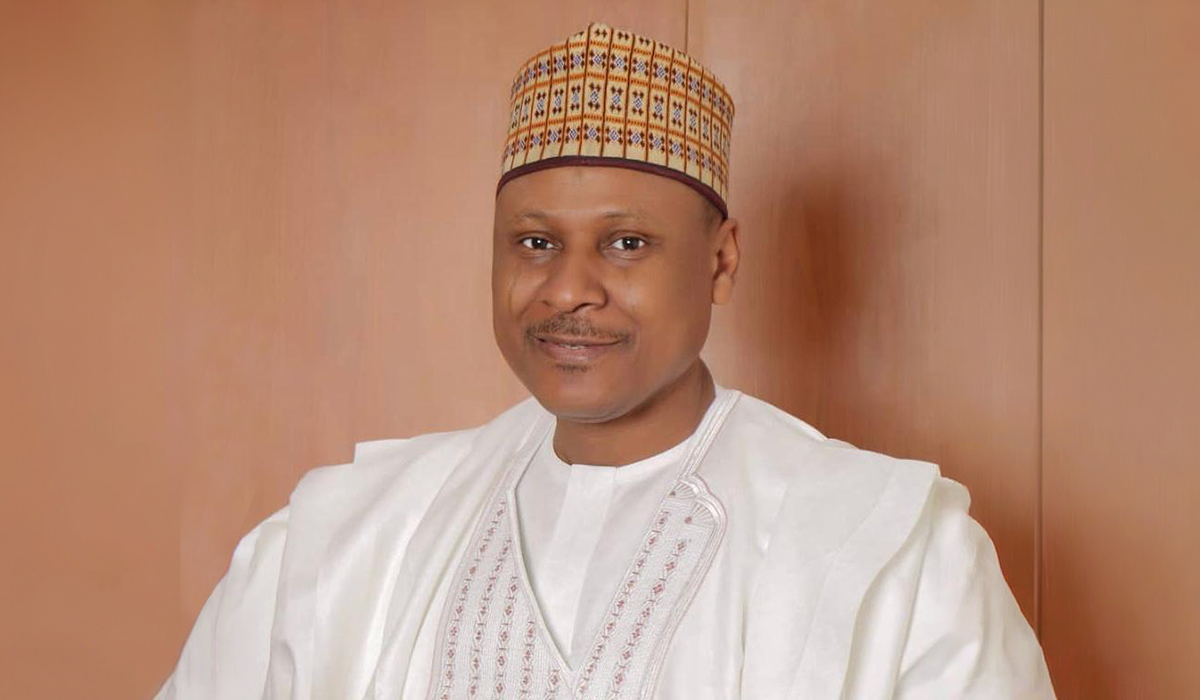
03 Jul Interview with Alhaji Mohammed Idris, FNIPR, Minister of Information and National Orientation of Nigeria
How would you describe Nigeria’s current economic transformation and reform agenda?
Nigeria is emerging as a key destination for investors, particularly those from the Americas and the United States. Since President Bola Ahmed Tinubu’s administration came into office in May 2023, a series of reforms have been introduced to reposition the economy, strengthen growth, and deliver on the economic prosperity promised to Nigerians at the beginning of his tenure.
Notably, Nigeria removed the fuel subsidy. The impact of this reform has been significant for the economy. Before this change, approximately 97% of government revenues were used to service debt, leaving only about 3% for other public services. This is not sustainable for any nation, or even for a household. President Bola Ahmed Tinubu therefore concluded that this was an unsustainable model for economic growth, built on a weak foundation. The structure itself was fundamentally flawed. Successive governments had recognized that fuel subsidy removal was necessary, but no administration had had the political courage or will to implement it.
It was not an easy decision, even for the President, particularly as he was preparing for a possible second term. Nevertheless, he made the decision in the national interest, to reposition the economy, redirect it, and establish a stronger foundation for growth.
Since the removal of the fuel subsidy, the results have been evident. Nigeria is a federation comprising 36 states and the Federal Capital Territory. Previously, 27 of those 36 states were in such a difficult financial position that they were unable to pay salaries and wages. Today, revenues have increased significantly. In some cases, states now receive two to three times what they previously received, and they have sufficient resources to meet salary obligations. Workers across federal, state, and local government levels are now being paid, which was not the case before. This reform has also created fiscal space for the federal government to implement broader policies aimed at economic growth.
The second major reform is the unification of the foreign exchange market. Previously, access to foreign exchange was largely limited to those with connections to the central bank, and multiple exchange rates existed. Rates often changed within the same day, depending on access and timing. This created serious challenges for investors and manufacturers. Nigeria imports a significant share of its goods, so access to stable foreign exchange is critical for planning and doing business.
President Tinubu therefore introduced a unified foreign exchange system to improve transparency, support economic planning, and facilitate growth. In addition, the government is rolling out tax reforms and launching one of the most ambitious infrastructure programs in the country’s history. More than 1,700 kilometers of roads have been under construction since 2023. These changes have also strengthened Nigeria’s engagement with the international community. For the first time in over a decade, Nigeria’s foreign reserves have risen to over USD 50 billion. GDP is also increasing, while both headline and food inflation are improving relative to earlier expectations.
Challenges remain, particularly in the area of security. However, the government is addressing these through both kinetic and non-kinetic approaches. Terrorist groups operating in parts of the country have been largely degraded, and movement across most of the country is now possible without major restriction, although isolated incidents still occur in some areas. The key difference now is that the challenges are clearly acknowledged, and measurable progress is being made toward resolving them. In summary, the reforms under President Bola Ahmed Tinubu are repositioning Nigeria for growth.
Nigeria is diversifying its economy, moving from oil into non-oil sectors and mineral resources. With a population of over 200 million people – around 70% of whom are under the age of 35 – it is a young and dynamic society. The country has over 70 federal universities, alongside a growing number of private universities and schools. The government has also introduced the Nigeria Education Loan Fund, which provides near-interest-free funding to students, enabling many who previously could not afford higher education to now access it. Over one million students are currently benefiting from this program.
Nigeria, which previously had an economy considered less stable, is now on a more sustainable path. International institutions such as the IMF and the World Bank, along with other agencies, have acknowledged that Nigeria is moving in the right direction. There is rising global recognition that Nigeria is becoming a key destination for investment. Foreign direct investment is increasing, and confidence in the market is strengthening.
As Nigeria marks the third anniversary of President Bola Ahmed Tinubu’s administration, what are the defining elements of the country’s development that you believe the international community should better understand?
One of the defining features of this administration is its willingness to undertake difficult but necessary reforms to secure Nigeria’s long-term future. President Bola Ahmed Tinubu inherited significant economic challenges and made bold decisions to stabilize the economy, improve fiscal sustainability, and lay a stronger foundation for growth.
Beyond the macroeconomic reforms, there have been tangible interventions that directly affect citizens’ lives. Through the Nigerian Education Loan Fund (NELFUND), hundreds of thousands of students now have access to financing for tertiary education. Major infrastructure projects such as the Lagos-Calabar Coastal Highway and the Sokoto-Badagry Super Highway are intended to improve connectivity, stimulate economic activity, and create jobs. The Presidential Compressed Natural Gas (CNG) Initiative is helping to reduce transportation costs and expand cleaner energy alternatives.
The administration has also prioritized food security, digital innovation, healthcare, and social investment programs. What the international community should understand is that Nigeria’s reforms are not isolated policy actions; they are part of a comprehensive strategy to build a more competitive economy and improve the quality of life for Nigerians.
Nigeria is often described as the “Giant of Africa.” How is the government shaping a contemporary narrative that reflects both this legacy and the country’s current transformation?
Nigeria’s leadership role in Africa is rooted in its history, population, economy, culture, and diplomatic influence. However, today’s narrative must go beyond size. We are promoting a narrative centered on innovation, creativity, enterprise, and opportunity. Nigeria has become one of Africa’s leading technology hubs. Our creative industry has global reach. Nigerian businesses continue to expand across the continent, while our young people are driving innovation in sectors ranging from fintech to agriculture.
At the same time, government is implementing reforms and investing in strategic projects such as the Lagos-Calabar Coastal Highway, rail modernization programs, gas infrastructure development, and digital economy initiatives. The message is that Nigeria is not only Africa’s largest country by population; it is also a country actively transforming itself to compete and lead in the twenty-first century.
How is the Ministry aligning national orientation efforts with the Federal Government’s broader priorities, including the “4Ds” framework of Democracy, Demography, Development, and Diaspora?
National orientation is central to achieving the objectives embedded in the 4Ds framework. On democracy, we promote civic responsibility, national unity, and citizen participation in governance. On demography, we focus on empowering Nigeria’s youthful population through awareness programs that encourage education, entrepreneurship, innovation, and responsible citizenship. On development, our communication efforts support major government initiatives, including infrastructure development, agricultural expansion, digital transformation, healthcare improvements, and educational programs such as NELFUND.
Regarding the diaspora, we recognize Nigerians abroad as important ambassadors and contributors to national development. Their investments, remittances, expertise, and international networks remain vital to Nigeria’s growth and global engagement. Through the National Orientation Agency and other platforms, we continue to build a stronger culture of patriotism, national cohesion, and citizen participation.
Nigeria has indeed recorded notable macroeconomic progress in recent years. How is the Ministry ensuring that these achievements are clearly communicated to global investors and international partners?
Our responsibility is to ensure that Nigeria’s progress is communicated through facts, transparency, and measurable outcomes. Investors want evidence, not slogans.
We therefore work closely with key institutions such as the Ministry of Finance, the Central Bank of Nigeria, the Nigerian Investment Promotion Commission, and other relevant agencies to communicate reforms and opportunities.
Whether it is the removal of fuel subsidies, foreign exchange market reforms, the growth of external reserves, improvements in tax administration, or major infrastructure investments, we ensure these developments are presented accurately to domestic and international audiences.
We also actively engage international media organizations, diplomatic missions, development partners, investor forums, and global platforms.
For example, Nigeria’s successful removal from the FATF Grey List represents a significant vote of confidence in our financial regulatory environment and anti-money laundering framework. Such achievements send strong signals to investors and are important parts of the story we tell about Nigeria’s economic transformation.
In your view, how does strategic communication contribute to strengthening confidence – both domestically and internationally – in Nigeria’s reform agenda?
Reforms succeed when people understand them. Strategic communication helps citizens and investors appreciate both the rationale behind policy decisions and the benefits expected from them.
When the government introduced major economic reforms, there were understandable concerns among citizens. Through sustained engagement, public information campaigns, media briefings, and stakeholder consultations, the government has sought to explain not only the challenges we inherited but also the opportunities the reforms are creating.
Strategic communication is equally important internationally. Investors are more likely to engage with countries that communicate consistently, transparently, and credibly. When we communicate achievements such as expanding infrastructure investment, student loan programs through NELFUND, improvements in ease of doing business, and growth in the digital economy, we strengthen confidence in Nigeria’s future. Communication is not merely about projecting good news; it is about building trust through openness and accountability.
As the host of the 2026 World Public Relations Forum, how does Nigeria intend to leverage this platform to redefine its global narrative and project its modern identity?
The World Public Relations Forum presents a historic opportunity for Nigeria and indeed Africa. For the first time, some of the world’s leading communication professionals, policymakers, academics, and industry leaders will gather in Nigeria to discuss the future of communication and reputation management.
We intend to use this platform to showcase Nigeria’s strengths beyond the traditional narratives that often dominate international coverage. Visitors will experience firsthand Nigeria’s innovation ecosystem, thriving creative industry, entrepreneurial culture, hospitality, and youthful energy. The Forum will also provide an opportunity to showcase initiatives such as the UNESCO Category 2 International Media and Information Literacy Institute (IMILI), which reflects Nigeria’s growing leadership in global conversations around information integrity, digital literacy, ethical communication, and the responsible use of technology.
Nigeria is home to one of Africa’s largest technology sectors, a globally influential creative industry, and a vibrant private sector that continues to drive growth across multiple sectors. The Forum will provide an opportunity to demonstrate how these strengths are contributing to national development and global relevance. Most importantly, it will reinforce Nigeria’s position as a leader in shaping conversations about communication, reputation, and nation-building in Africa.
What is the current state of bilateral relations between Nigeria and the United States?
It is a very strong and positive relationship. In the past, the United States designated Nigeria as a “country of particular concern.” However, we have seen this as a constructive development. Rather than viewing it negatively, the Nigerian government has used it as an opportunity to strengthen cooperation and address key national priorities.
At the same time, there is significant mutual engagement. Many Americans are showing strong interest in investing in Nigeria, and Nigerians continue to engage actively with the United States. In fact, one of the largest areas of U.S. investment in Nigeria is in the health sector, which has grown in recent years.
This increased cooperation, even after the designation, reflects a broader reality: while the United States encourages continued reform and strengthening in certain areas, it is also deepening investment ties. This is helping to build greater collaboration and shared prosperity between both countries.
The relationship is also strongly people-driven. There is a large Nigerian community in the United States, represented across many sectors. You will find Nigerians contributing meaningfully in fintech, technology, and cultural industries, among others.
So the relationship is not only government-to-government; it is also deeply rooted in people-to-people connections. This broader foundation continues to strengthen bilateral ties for the benefit of both nations.
To what extent do you see your experience supporting nation branding and public diplomacy for Nigeria at this pivotal moment?
Having spent decades in journalism, media management, and public communication before entering public service, I understand the power of narratives in shaping perceptions. Today, nation branding is no longer simply about image management; it is about communicating substance. Nigeria’s story must be told through the achievements of its people, institutions, and economy.
For example, Nigeria’s technology ecosystem continues to attract global attention. Our creative industry, particularly Nollywood and the music sector, has become a powerful cultural export. Nigerian entrepreneurs are building businesses that are expanding across Africa and beyond. Through strategic communication, we can connect these success stories with the government’s broader development agenda. My role is to ensure that Nigeria’s progress, opportunities, and aspirations are presented accurately and confidently to the world.
Looking ahead, what is your vision for Nigeria’s global positioning, and how can communication continue to support the country’s ambition to attract investment, partnerships, and international trust?
My vision is for Nigeria to be recognized as Africa’s premier destination for investment, innovation, talent, and opportunity. Nigeria possesses enormous advantages: a large and youthful population, abundant natural resources, strategic geographic positioning, an expanding digital economy, and a dynamic private sector. Our task is to continue creating an environment where these strengths can thrive. Communication will remain a critical enabler of that vision. Investors, development partners, and global institutions need confidence in a country’s direction. Through consistent and transparent communication, we can showcase progress in areas such as infrastructure development, energy transition, technology, agriculture, education, and institutional reform.
Ultimately, our goal is to ensure that when the world thinks about Nigeria, it sees a nation that is reforming, innovating, creating opportunities, and playing a leading role in shaping Africa’s future.
Sorry, the comment form is closed at this time.