
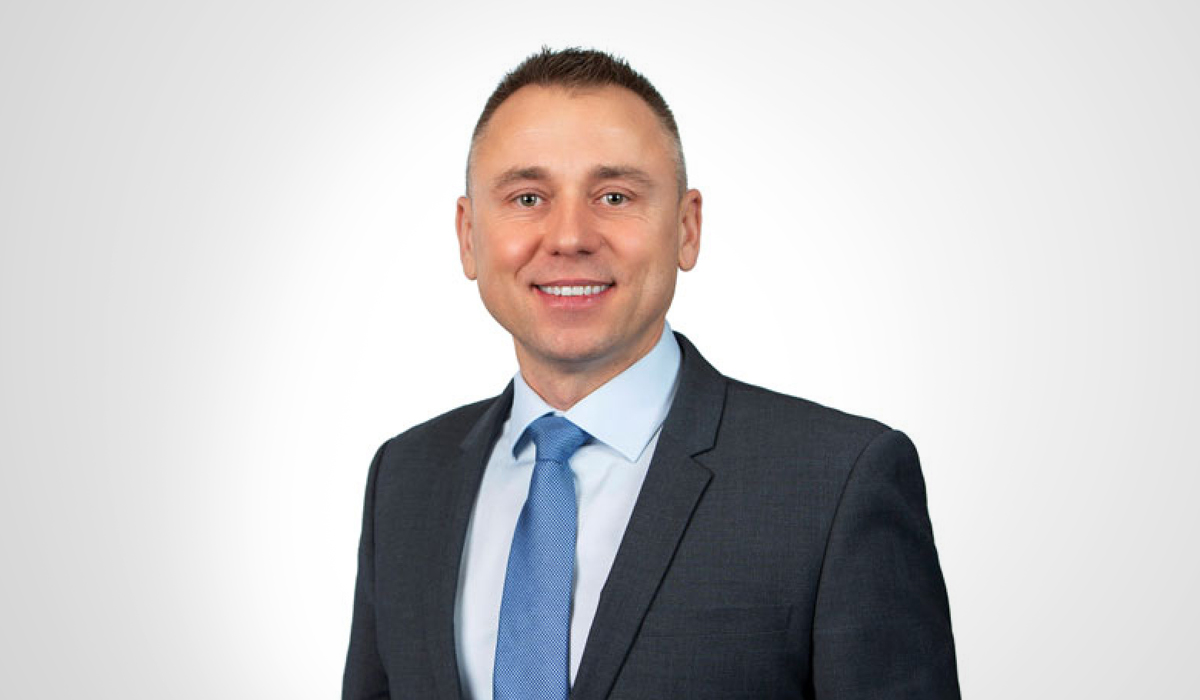
01 Jul Interview with Andrew Boitchenko, Minister of Tourism and Sport of Alberta
Tourism is emerging as a leading force in Alberta’s economic diversification. How would you assess Alberta’s tourism performance today?
We are seeing very healthy growth in Alberta’s tourism sector. A few years ago, when visitor spending stood at approximately CAD 10 billion, we launched a strategy to grow the industry to CAD 25 billion by 2035. That represents 150% growth over a ten-year period, and we are well on our way to achieving that goal. In 2024, the industry reached CAD 14.4 billion in visitor spending, and in 2025 that figure increased to CAD 15.2 billion. We continue to break records and are hopeful that this year will be another record year for growth. To put that into perspective, Alberta’s tourism industry is growing at twice the national average. We are outperforming the Canadian tourism sector as a whole, and we are also the only province that recorded an increase in visitors from the United States.
Most of our international visitors arrive by air, and 80% of American visitors fly directly into Alberta. The numbers are staggering. In 2024, we welcomed nearly one million direct-entry visitors from the United States – 977,000, to be exact. While the U.S. remains a key market, we are also expanding our global reach by developing new direct air connections to high-value international markets around the world. What are the factors behind this success? One of the most important is Indigenous tourism. Approximately one in three international visitors comes to Canada seeking Indigenous tourism experiences, and this continues to be a significant area of growth.
At the same time, we are working to expand tourism beyond Alberta’s best-known destinations. Banff, Lake Louise, and Canmore are already internationally recognized, but we are focused on creating and promoting destinations beyond those locations. The goal is to encourage visitors to explore more of the province, extend their stays, and experience Alberta year-round rather than only during peak seasons. Ultimately, our approach is about diversifying, growing, and expanding Alberta’s tourism sector so that its benefits are felt across the entire province.
Could you tell us more on these new experiences and destinations that will drive the next phase of tourism growth in Alberta?
When we look beyond Alberta’s busiest and best-known destinations, that is where many of the new tourism experiences are emerging.
One of them is Indigenous tourism, which continues to grow year after year. In 2025, projected Indigenous tourism revenues reached CAD 138 million, and in 2026 we expect that figure to more than double, approaching CAD 300 million. That growth is creating entirely new experiences for visitors and represents one of the most exciting opportunities in the sector.
We are also focused on developing new all-season resorts. The framework we introduced in 2024 is now allowing new projects to move forward, including in areas such as Kananaskis. These developments will provide visitors with new ways to experience the mountains, while also encouraging them to explore more of the province.
How important are major sporting events to Alberta’s tourism strategy, and what impact do they have on the province?
We are positioning ourselves as a premier destination for hosting major sporting events. There are a growing number of major sporting activities and events taking place across the province. We have strong venues, including stadiums of almost 60,000 seats, which are not common in many parts of Canada anymore, but we have that capacity here. So we warmly invite people to come and experience these events for themselves. To give you some perspective, when we secured the bid to host the World Cup of Hockey, we competed against more than a dozen destinations across North America, including major cities in both Canada and the United States. Winning that bid was a significant achievement.
It will be the largest international sporting event hosted in Alberta since the 1988 Olympics. We expect it to generate more than CAD 375 million in economic impact. It is also projected to support approximately 40,000 jobs and deliver over 170,000 night stays. The IIHF World Junior Championship is also coming to Alberta in 2027. That event alone is projected to generate more than CAD 50 million in economic activity.
Another important event is the Canadian Finals Rodeo. It has been held in Alberta since 1974 and continues to grow every year. The event is expected to contribute approximately CAD 32 million in economic activity, support more than 5,000 jobs, and create more than 12,000 hotel room nights. It is an absolutely outstanding show and one that truly reflects the province’s sporting culture. It is something you really have to put on your bucket list when you come to Alberta, because the performance is outstanding. I would say it is one of the best in the world.
Through programs such as Active Communities, the ministry is strengthening the quality of life across Alberta. What examples best demonstrate this impact at the community level?
Through the CAD 9 million Active Communities initiative we are supporting local infrastructure across Alberta. That includes repairing older facilities that are in urgent need of upgrades, such as ice rinks, hockey rinks, and soccer fields, while also supporting the development of new infrastructure. As a minister, I had to make a decision between focusing on one major infrastructure project or creating more opportunities across the province. I chose to build many opportunities. A key part of this approach is expanding access to more cost-effective facilities, such as air domes or “bubbles,” which typically cost between CAD 3 and 7 million to build. Through the Active Communities initiative, we deliver these projects across Alberta, creating opportunities for kids, youth, and seniors to stay active year-round. In Canada, where winter and weather conditions can limit outdoor activity, these facilities help ensure year-round participation in sport and recreation. We are working in partnership with federal, provincial, municipal, and not-for-profit partners to expand access to these opportunities. It is an important program that supports community sport infrastructure across the province, and my goal is to double the funding so we can continue expanding it further.
How do you balance continued tourism growth with protecting the natural environments that make Alberta unique?
I really like this question, because it is very important to balance growth with sustainability in the province. We have beautiful mountains, lakes, rivers, and a stunning natural landscape, so the vision is to ensure a development balance where we maintain that beauty while also allowing people to experience it.
My background before politics is in land development, and I have been called a “green land developer” because I have always focused on sustainability rather than maximizing financial return. Some of my partners and competitors even called me a “tree hugger” because I try to preserve as many trees as possible in development areas. That approach reflects how I think about development more broadly – creating infrastructure that blends into the natural environment without harming it. That is very important to me personally, and also in my role as minister.
The way we are trying to balance this is through programs such as our All-Season Resorts policy, which supports sustainable and responsible development on public, or Crown, land in the province. These are lands owned by the province where Albertans have access rights. Through this policy, we are enabling sustainable resort development that allows more people to experience Alberta’s mountains in a responsible way. It also helps expand access to these natural areas while ensuring they are protected for the long term.
What are your key priorities for sport and tourism heading into 2026?
I have two priorities – one on the sport side of my portfolio and one on the tourism side.
On sport, I want to see continued growth in infrastructure across the province. At federal, provincial, and territorial meetings with other ministers, I recently raised the challenge of aging infrastructure not only in Alberta but across Canada. I volunteered to strike a committee and chair it, focused on identifying urgent repair needs as well as opportunities to build new infrastructure. My goal is to support both renewal and expansion of sport facilities in the province.
We are already leading the country in hosting major sporting events. In cities such as Toronto and Vancouver, hundreds of millions of dollars were invested to bid for FIFA games. In Edmonton, a preseason game required minimal investment, yet we sold more seats than Vancouver and Toronto. That reflects strong local enthusiasm, a large volunteer base, and our ability to deliver major events. We are also exploring opportunities to host an NFL preseason game in Alberta.
On the tourism side, my goal is to continue building on current growth. Last year we reached $15.2 billion, and I would be very pleased to surpass $16 billion in tourism spending next year. That would represent close to a billion dollars in year-over-year growth. I also want to continue strengthening our relationship with the U.S. market, given the proximity and importance of that market, and maintain growth well above the national average.
How is Alberta’s tourism relationship with the United States performing today, and what opportunities exist to further grow visitation, particularly from California?
I love California myself – I’ve been there many times. Politically, there can sometimes be pressure and ups and downs, but our province, our Premier, and we as ministers, and myself personally, all value U.S. travelers. That is why the growth we are seeing is not accidental. We have seen a 37% increase in spending from U.S. visitors in 2025. Looking at the first four months of 2026 compared to the same period in 2025, there is also a 27% increase in U.S. visitors.
We are focused on U.S. travelers because they are one of our key markets. Around 80% of American visitors fly into our province. They love Canada, they respect Canada, and they choose to travel here. We consider U.S. visitors as our closest neighbors and a relationship we deeply value. The fact that Alberta is the only province in Canada seeing this level of growth is not by chance – it reflects a clear strategic focus. We are working to grow air access and strengthen connections between Canada and the U.S., particularly with California given its proximity, as well as other parts of the country. We are investing in more direct flight connections and broader air access.
Looking ahead, what is your long-term vision for Alberta as a world-class destination for both tourism and sport?
Our long-term vision is to reach the $25 billion target by 2035, and not only meet it, but exceed it and continue growing beyond that. I see tourism and sport as key drivers in diversifying our economy alongside our strong energy sector. Tourism is one of the fastest-growing sectors in the world, and in Alberta it is already the fourth-largest export. The fact that we continue to see year-over-year growth in tourism, and that we are outperforming the Canadian average, shows that we are on the right path in terms of development and diversification.
As a final message, what sets Alberta apart as a destination for tourism and investment?
First of all, it’s our beautiful mountains. I don’t think there are many places in the world where you can see landscapes like we have in Alberta.
We are focused on growing and expanding tourism like few other places, and we are developing more destinations so that when people come, they can see not only the mountains, but everything else the province has to offer. That includes unique experiences such as dinosaurs and world-renowned fossil sites. Drumheller is a key destination, known for its rich discoveries, and in recent years we have also seen new finds in areas like Grande Prairie. Second, the most important part, is the people. Albertans are very welcoming. It is a secure, family-friendly province, and safety when traveling is very important. Third, we have one of the largest Indigenous tourism sectors in the world, and it continues to grow. For visitors who want to experience Indigenous tourism, Alberta is the place to be.
The reason people should look at Alberta is because it is welcoming, safe, and beautiful, with a government focused on growth and creating experiences you cannot find anywhere else in the world. As Minister of Tourism and Sport, I want to take this opportunity to invite people from around the world to come and experience our province, with its vibrant cities, remarkable landscapes, and strong Indigenous heritage.
Sorry, the comment form is closed at this time.