
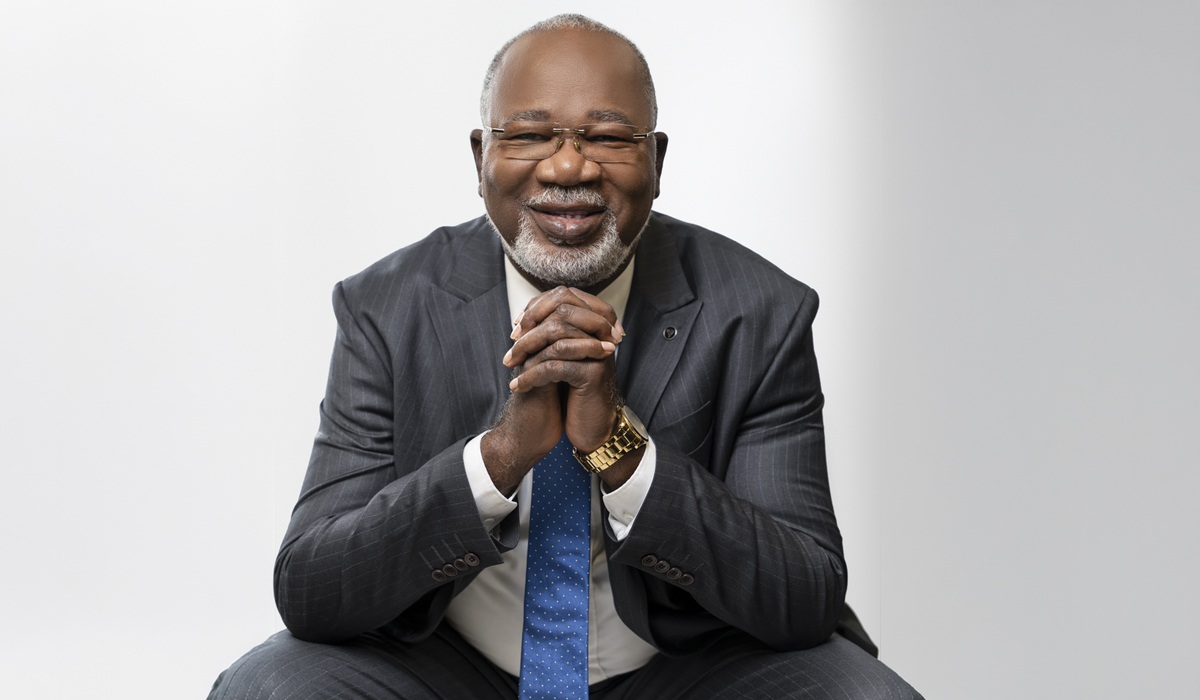
06 Jul Interview with Louis Mussington, Président Collectivité de Saint-Martin
In 2025, the Collectivité de Saint-Martin delivered more than 30 public procurement projects, including a $2 million slaughterhouse restructuring, upgrades to sports facilities and modernization of the fire station. What major infrastructure milestones achieved in 2025 and early 2026 best illustrate Saint Martin’s progress toward long-term economic resilience and improved quality of life?
When we came into office, we had a clear plan to significantly improve infrastructure after the destruction caused by Hurricane Irma in 2017. Construction quickly became a priority for our government. We focused on improving the road network across the island and expanding public lighting, especially in darker areas such as parts of Marigot. Residents have responded very positively to these changes.
Education has also been a major priority. The construction of the new secondary school in La Savane was essential and today 580 students are already studying in this modern, state-of-the-art facility. This reflects our strong commitment to providing quality education and better learning environments. We also invested significantly in renovating the high school in the French Quarter that was completed in May 2026. We have invested around $76.8 million in the construction of two junior high schools. Our priority was first to provide modern facilities and now to focus on improving the educational program itself. I strongly believe in bilingual education, giving the children of Saint-Martin the opportunity to master both English and French. This long-term goal requires continued support, including from the French government, especially in providing more bilingual teachers. Finally, we are advancing ecological transition by developing greener public spaces and promoting sustainable planning.I am very proud of these modern achievements.
We are also prioritizing the rebuilding of sports infrastructure. Before Hurricane Irma, three stadiums were in operation but were severely damaged. We are now rebuilding all three facilities to meet the needs of our youth and to host official CONCACAF competitions. We have already awarded the contract for one stadium in the French Quarter area. It will be a modern, state-of-the-art facility, unique in the Caribbean and is expected to be completed within the next two to three years.
We are still working on infrastructure, including the urgent need for a new citizen home for seniors. During this mandate, we secured the land, but we are still finalizing the technical aspects with the French Health agency. We now need to move quickly toward construction. The current facility is outdated and not suitable for modern care. The new center will include outdoor spaces, gardens and areas for walking and activities to help seniors stay active and reduce isolation. We hope to begin construction by late 2026 or early 2027.
We are also planning cultural centers in the three main areas — Marigot, Grand Case and the French Quarter — to support activities such as music, dance and theatre for young people outside school. These projects are costly, so we are working with engineers to reduce expenses, including for the planned coastal road project. Given limited public resources, we must carefully prioritize investments.
In November, the Collectivité published a public inquiry into the Galisbay Port Project. How will the expansion and modernization of the Port de Saint-Martin strengthen economic activity and support local livelihoods?
We are exploring the expansion of the port, including a dedicated cruise terminal to better serve visitors to Sint Maarten. This is a fast-growing sector and to remain competitive in the Caribbean, we must have the right infrastructure in place. The project requires significant investment — around $160 million — so we are seeking funding through public-private partnerships, including support from France and private investors. The same approach applies to the airport runway extension, which would reach about 1,300 meters and require approximately $20.6 million in financing.
We also plan to build a new modern administrative building to replace the current City Hall, which dates back to 1977 and is no longer suitable for today’s needs. These projects are costly, so careful financial planning is essential.
The administration has prioritized innovation through initiatives such as BOOST and Mon Beau Commerce, alongside the launch of a One-Stop Shop for Assistance in February to streamline access to public funding for businesses, associations and project leaders. How critical is the role of SMEs and entrepreneurs in building a dynamic and diversified economy in Saint Martin and how is the Collectivité supporting their growth?
We welcome all ideas, business initiatives and partnerships with private investors. I am currently in discussions with two hotel groups on plans to develop new hotel projects in Saint-Martin. This is very important given our high unemployment rate. Investment in the hotel sector will create jobs, reduce unemployment and make the island more attractive to visitors and foreign investors.
We aim to strengthen tourism, especially for guests enjoying our beaches and natural sites, as well as day trips to Anguilla and Saint Barts. Since Hurricane Irma, we have experienced a significant loss of hotel capacity, so these new investments are essential to rebuilding the sector and meeting tourism demand.
In the context of increasing climate risks following Hurricane Irma, how is Saint Martin advancing resilience, reducing emissions and positioning itself as a more sustainable island economy?
There is a partnership with the State, as this falls under France regulations. The French government provides the guidelines that must be followed for development, including hotel construction. Even if we aim to encourage new investment and a more dynamic tourism sector in Saint-Martin, projects must comply with strict planning and environmental rules. These policies ensure that coastal development is safe, structured and resilient. This framework applies to both investors and local residents and it guides how rebuilding and new construction are carried out in a more organized and sustainable way.
Saint-Martin’s strategic location between the U.S. and Latin America reinforces its role as a regional hub for tourism and investment. How significant is the USA as a strategic partner for trade, tourism and investment and what recent efforts have strengthened this relationship?
It is clear that the U.S. market is essential to the economy of Saint Martin. Since the 1960s and 1970s, when we transitioned from a rural economy to tourism, visitors from the United States and Canada have been our main source of growth. Today, most guests still come from the U.S. East Coast, such as New York, New Jersey and Boston, with some from the Midwest. While high-end visitors still come, some now choose destinations like Anguilla and St. Barts.
To remain competitive, we must improve infrastructure, especially roads and traffic flow. Visitors expect easy movement on vacation, similar to what they experience at home. If we fail to meet that expectation, they may choose other destinations. Protecting this market is essential, as tourism is the foundation of our economy. Our goal is to ensure visitors feel comfortable and well served during their stay.
Which sectors present the most compelling opportunities for U.S. and international investors today? Why is this a particularly opportune moment to invest?
Artificial intelligence is an emerging area with strong potential and investment in this sector could benefit the whole of Saint-Martin, while also being profitable for investors. There is also clear opportunities in the hotel industry. After recent losses, the island can support two or three additional high-end, four or five-star hotels. Many international visitors still want to come, but expect upgraded accommodation. Overall, hotel investment would be beneficial for both the island and private investors.
As Saint-Martin continues its transformation, what message would you share with U.S. readers about the island’s future as both a premier destination and a rising economic opportunity?
We offer excellent cuisine, combining French and Caribbean flavors in Saint-Martin. Visitors can also enjoy boat trips to nearby islands, hiking and natural sites throughout the island. There are beautiful viewpoints and landscapes that make the stay even more memorable.
I encourage visitors to come to Saint-Martin. It is a dynamic island with a warm, welcoming population that is open to international guests. Visitors can enjoy our culture, cuisine, music and lively nightlife. For a fun and memorable vacation experience, Saint-Martin is the ideal destination.
Sorry, the comment form is closed at this time.