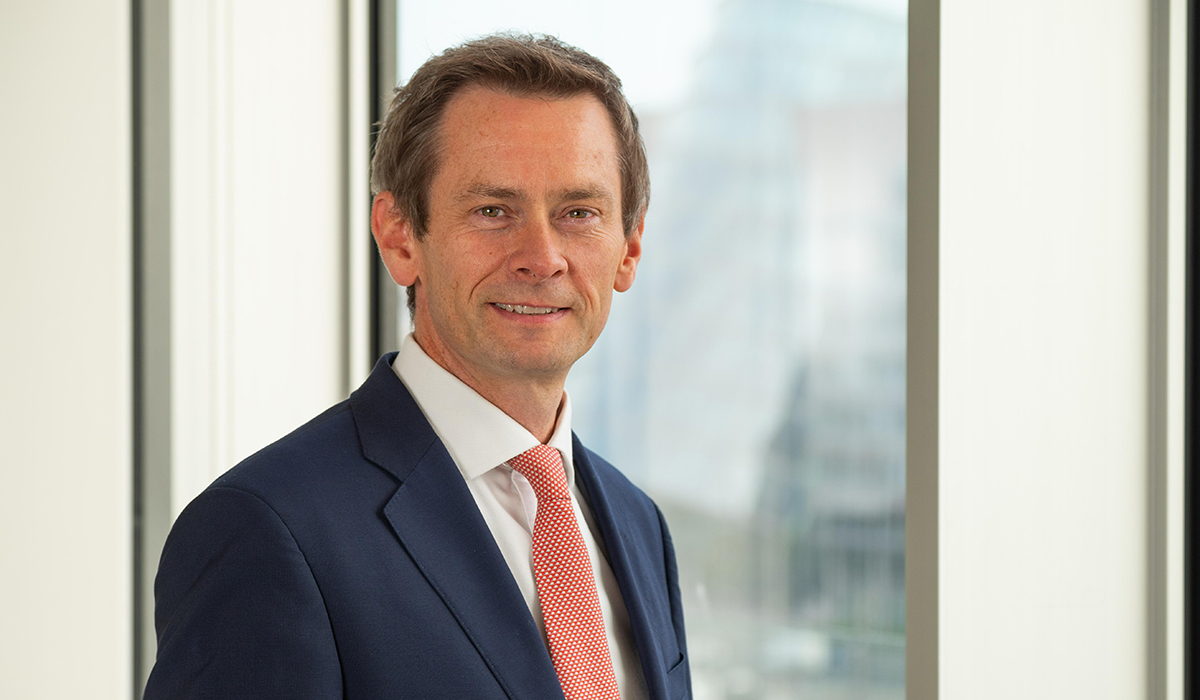
18 Oct Interview with Shane Hogan, Managing Partner, Matheson LLP, Ireland
Ireland has recorded remarkable economic growth over the past decade, with GDP expanding by almost 5% in 2025. As the country advances its National Development Plan 2026–2035, foreign direct investment remains central to strengthening competitiveness, infrastructure, and long-term economic growth. What has made Ireland such an attractive investment destination and how has the country maintained that appeal while balancing FDI with local development priorities?
It all comes down to certainty and consistency. For more than 40 years, Ireland has pursued a clear and stable strategy of attracting foreign direct investment, particularly from the United States. What began as a government initiative when Ireland was one of the poorest countries in the developed world evolved into the foundation of the country’s economic success. The key difference is that this strategy has been supported consistently by successive governments, as well as by businesses, professional services firms and universities. That long-term commitment continues to give investors confidence and predictability.
Ireland’s enduring focus on creating a welcoming environment for international companies, combined with decades of policy consistency, has established a strong track record and made the country a particularly attractive destination for U.S. investment. It is this consistency of approach, sustained year after year and decade after decade, that sets Ireland apart from many other jurisdictions.
Ireland made a clear policy choice: attract foreign direct investment to create high-skilled jobs for its people. In the 1980s, many talented Irish graduates had to leave the country to find career opportunities abroad. Today, that has changed dramatically. Ireland now has one of the highest rates of third-level education participation in the world and graduates can build successful careers at home in sectors such as financial services, technology, pharmaceuticals and energy. They no longer need to emigrate to find well-paid, sophisticated work. The benefits extend beyond employment. International companies create jobs, generate tax revenues and support broader economic and social development. As a result, young Irish people today have opportunities that simply did not exist in the 1960s, 1970s or 1980s. That is one of the most significant outcomes of Ireland’s long-term investment strategy.
From your advisory perspective, what trends are you seeing as U.S. companies expand into Ireland through new investments, regional headquarters and acquisitions?
At the start of 2025, there were concerns that changes in U.S. policy, including tariffs and broader geopolitical uncertainty, could affect investment in Ireland. In reality, U.S. investment reached a record high, reinforcing Ireland’s position as an attractive and stable destination for international business. The other major change is the scale and maturity of U.S. companies’ presence in Ireland. When I joined the firm in 2003, many viewed Ireland primarily as an investment location. Today, it serves as a genuine European hub for many multinational companies, with substantial operations and thousands of employees.
A key part of that success has been the local workforce. Irish teams have consistently demonstrated their value, earning the trust of global headquarters and attracting further investment year after year. As a result, Ireland has evolved from being simply an investment destination into a strategic location for long-term growth and repeat investment. That’s something the country can be very proud of.
Despite challenges such as rising energy costs and a tight labor market, Ireland has continued strengthening its business environment through targeted reforms, tax measures and funding programs. These efforts are helping reinforce the country’s reputation as one of Europe’s most competitive and business-friendly economies. What policy bottlenecks still need to be addressed to further strengthen Ireland’s competitiveness?
Housing is one of Ireland’s biggest constraints on growth and a key priority for the government. However, this is not unique to Ireland — housing shortages are a challenge across many European countries. The issue has been driven by population growth and a slowdown in construction during the COVID-19 pandemic, when building activity was significantly disrupted. Addressing the housing shortage requires increasing supply and there are encouraging signs of progress. Reforms to planning legislation and the creation of a dedicated High Court division for planning disputes are helping to accelerate development. At the same time, we are seeing growing investor interest in the sector, including from U.S. private equity and other international sources of capital. As a firm, we are seeing strong interest in the Irish housing market, which is a positive sign for future growth.
The second key constraint is electricity grid capacity. Ireland has a very high concentration of data centers by European standards, which brings opportunity but also significant pressure on the grid. The government has recognized this in the National Development Plan, with additional investment planned to expand capacity.
A third issue is Dublin Airport. Expansion is underway, but passenger capacity limits and related legal challenges are still being worked through. While this has created some uncertainty for investors, there is confidence that it will be resolved in the coming months. Overall, housing, electricity grid capacity and airport infrastructure are the three main constraints that need to be addressed to support continued growth.
Matheson recently launched its EU Presidency Hub to help clients navigate the European policy landscape. What priorities is Ireland expected to champion during its EU Presidency and what impact could they have on business?
There are four key themes Ireland will champion during its EU presidency. The first is competitiveness, which has become a central concern across Europe following reports such as the Draghi report. The focus is on ensuring Europe is as competitive as it is regulated and on supporting EU companies to grow and compete more effectively. Ireland is well placed to drive that agenda forward. The second is regulatory simplification. This is not about removing regulation, but making it clearer, more consistent and less burdensome, so that businesses can operate more efficiently across the EU. The third is progress on the Capital Markets Union, which has been discussed for many years but remains crucial. A more integrated capital market would help channel investment into key sectors and support long-term growth across Europe.
The fourth theme is security and defense, a major priority for the EU and one where Ireland is increasingly engaged. We recently held a seminar for clients on this topic, reflecting its growing importance. Ireland is also considering how to increase its own defense spending and contribution in response to the evolving geopolitical environment and the challenges the EU has faced over the past 18 months. It is an important and timely discussion and one where Ireland is well placed to play a leading role. Together, these priorities reflect a broader effort to strengthen Europe’s competitiveness and investment environment.
Ireland recorded higher deal volumes in 2025 despite a decline in overall transaction values, while international investors remained highly active across the market. Matheson has advised on many of the country’s most significant transactions, including the acquisition of Dalata, Ireland’s largest hotel group. What major transactions has Matheson advised on in recent years and what do they reveal about the direction of Ireland’s corporate market?
The direction of Ireland’s corporate M&A market is shaped by two key trends. First, U.S. investment remains very strong, with American trade buyers and private equity continuing to be a dominant source of capital. This has long been a core focus for us as a firm. Second, we are also seeing growing participation from European investors. This broader mix of capital reflects Ireland’s strength as an investment jurisdiction and the quality of assets available. Overall, Ireland is increasingly becoming a platform for global capital, not just U.S. investment.
Our deal activity reflects the sectors that matter most to the Irish economy and our firm is structured to focus on those strengths and advise leading companies in those areas. In life sciences, a critical export sector for Ireland, we have worked on major transactions including the $28 billion Amgen–Horizon Therapeutics merger, where we advised Horizon Therapeutics. We were also involved in Novo Nordisk’s work with Alkermes on a manufacturing facility. These transactions highlight the importance of life sciences to Ireland and our continued focus on advising market-leading companies in the sector.
In technology, we have recently worked on several significant transactions, including advising Expedia on its deal with CarTrawler and the $1.2 billion Accenture–Ziff Davis connectivity division transaction. In financial services, where the firm has a strong practice, we advised Carne Group on Permira’s $1.4 billion investment and worked on the $700 million J.P. Morgan Global Shares transaction. We have also been involved in a number of insurance-sector acquisitions by Arthur J. Gallagher, which remain an active area of U.S. dealmaking in Ireland. In aircraft leasing, we acted on CDB Aviation’s $625 million sustainability-linked loan and on the Airbus H160 helicopter financing. In renewable energy, we advised Ardian on its €2.9 billion acquisition of Energia in Ireland and Copenhagen Infrastructure Partners on the acquisition of Ørsted’s Irish wind portfolio. We also worked on the Dalata transaction in the hotel sector, which supports Ireland’s wider corporate activity and inbound business travel. Across all of these deals, the same core sectors stand out: financial services, technology, life sciences, renewable energy and hospitality — each underpinning Ireland’s broader economic success.
Ireland’s labor market remains one of its strongest competitive advantages, supported by high employment, flexible regulations and continued investment in skills development. Recent reforms, including changes to pensions, pay transparency and minimum wage legislation, are reshaping the employment landscape. From a legal perspective, what makes Ireland such a supportive environment for startups, SMEs and entrepreneurs?
When U.S. companies consider investing in Europe, they typically compare several jurisdictions, including labor market conditions and regulation. One of Ireland’s key advantages is its labor law framework. It sits between the U.S. and continental Europe and is often closer to the U.S. model. For international investors, this makes Ireland a relatively flexible and predictable place in which to employ staff. Ireland has a voluntary system of industrial relations, limited use of works councils compared to many EU countries, lower collective bargaining coverage and more straightforward dismissal procedures. The overall system is designed to balance employee protections with a competitive environment for international investment.
Ireland’s employment landscape is evolving and investors need to keep pace with several key reforms. The EU Pay Transparency Directive is on the horizon, alongside established gender pay gap reporting requirements, which are already improving transparency and diversity in the workplace. At the same time, reforms to the employment permit system are modernizing immigration pathways and making it easier for multinational companies to access skilled talent in Ireland. On flexible working, employees can request remote work, but it is not an automatic right. Separately, AI is increasingly being used in recruitment and hiring processes, which is an emerging development to watch. Overall, Irish labor law remains relatively flexible and is more closely aligned with the U.S. model than with much of continental Europe.
Founded in Dublin in 1825, Matheson has grown into one of Ireland’s leading commercial law firms, with approximately 930 legal professionals across six international offices. The firm advises many of the world’s largest corporations on investment, finance, technology, and corporate transactions. Can you introduce Matheson and give an overview of its international footprint, including its presence in San Francisco?
About 25 years ago, Matheson made a strategic decision to focus on advising internationally oriented companies and financial institutions doing business in and from Ireland. That approach closely mirrors Ireland’s broader economic strategy of attracting foreign direct investment, particularly from the U.S., but also from the UK and Europe. We have structured the firm to support that flow of investment. A key part of this is our dedicated International Business Group, the only one of its kind in an Irish law firm. It sits within our corporate practice and helps inbound investors establish the right legal and corporate structures when setting up in Ireland. It is a well-established and successful team that plays a central role in supporting international clients entering the Irish market.
We have a very large dedicated tax practice led by 18 tax partners — the largest of its kind among leading Irish law firms. This reflects the importance of tax certainty and treatment for international investors choosing Ireland. Our tax team helps clients establish operations in Ireland and continue investing in a compliant and efficient way over time. Alongside this, we have strong specialist practices, including technology and the firm is structured as a full-service platform to support U.S. and other international investors at every stage of their investment in Ireland. Service is central to everything we do. On most cross-border transactions, we work alongside clients’ U.S. law firms and we are expected to match their high standards of client service. Our aim is to ensure clients experience the same level of responsiveness and quality from us in Dublin as they do from their U.S. advisors, while also receiving deep, practical expertise in Irish law. We are very conscious that we are not a “smaller market” option in terms of service or capability. We are fully committed to delivering excellence and top-tier client service on every matter.
The firm’s growth is driven not only by our strategy of serving internationally focused companies and financial institutions in Ireland, but also by a strong focus on people. We recognize that our success depends on attracting and developing the best talent. As a result, we have a large dedicated learning and development team that delivers structured training across all levels of the firm. Many of our lawyers start as interns, progress through summer programs and then join as trainee solicitors before developing into junior lawyers. At every stage, they receive ongoing training from our L&D team, partners and senior associates. This focus on continuous development ensures we maintain the highest standards of legal expertise and client service.
Over the past decade, law firms have increasingly recognized the importance of culture and it is central to our approach. Our values — PRIDE: partnership, respect, innovation, diversity and entrepreneurship — are not just statements; they shape how we work every day. In a demanding profession, a supportive and collaborative environment is essential for retaining talent and maintaining high performance. While client work can be intense, we are committed to ensuring the internal environment does not add unnecessary pressure. We were among the first Irish firms to sign the Mindful Business Charter and early recipients of the Gold Standard for Diversity and Inclusion. This focus has helped us maintain low attrition and strong engagement, creating a culture where people want to stay and consistently deliver their best for clients.
You recently wrote about the challenges facing law firms in adopting fresh technologies like AI. How are technologies such as AI transforming the legal profession and how is Matheson positioning itself at the forefront of this change?
AI will clearly have a transformative impact on the legal profession, although the full extent is not yet clear. It will change how firms work, organize themselves and train their people, while also improving efficiency and turnaround times for clients. At the same time, adoption needs to be careful and considered. We have carried out detailed due diligence on the available tools and have focused on selecting those that genuinely add value. We have also been deliberate about how they are introduced, who uses them and how teams are trained. Our approach includes appointing AI champions across practice groups and delivering firm-wide training covering both practical use and governance safeguards. This structured rollout has helped drive safe, responsible adoption and increasing engagement across the firm over the past year. We are committed to becoming the most technologically advanced law firm in Ireland, but in a careful and responsible way.
Our goal is to be at the center of the AI transformation in the legal sector while ensuring we implement it properly and with appropriate safeguards. Routine and administrative tasks are increasingly likely to be handled by AI, which is a positive development, as it allows junior lawyers to engage with more complex and interesting work earlier in their careers. The role of the lawyer going forward will depend increasingly on strong interpersonal skills that distinguish them from AI tools. Lawyers will need to build deep, trusted client relationships and provide judgment, experience and practical insight to help clients navigate complex cross-border issues. Therefore, our training must place even greater emphasis on these human skills so that our lawyers can deliver real value and strengthen client relationships. It is an exciting time for the profession.
You have led an incredibly successful career since joining Matheson in 2003, including heading the firm’s financial institutions group and co-leading its corporate department. Today, you are guiding one of Ireland’s most prominent law firms during a period of rapid economic and technological change. What are your top priorities as managing partner and where would you like to see Matheson over the next five to ten years?
We want to be known even more for providing commercially focused solutions to our clients. That means not just giving legal advice, but understanding the commercial context, the industry and the challenges our clients face. Our advice should be practical, tailored and focused on real-world outcomes. In everything we do, we aim to see matters through the client’s perspective and deliver solutions that work in a business context. Second, we see ourselves as a relationship-driven firm. We focus on long-term partnerships rather than one-off transactions, acting as trusted advisors who support clients when they need us most. That same approach applies internally. We aim to be a progressive employer, helping our people develop their skills and careers over the long term in a supportive environment.
Third, we want to be recognized as an innovative and entrepreneurial firm, particularly in how we adopt AI and new technologies. That means staying current with change, but also anticipating it — ensuring the firm continues to evolve and remain ahead in a rapidly changing profession.
What is your final message to LA Times readers?
In a period of global uncertainty, Ireland offers U.S. companies a stable and consistent gateway to the EU, with a strong track record of political and regulatory reliability. It is a predictable, well-established jurisdiction in which to invest. From a Matheson perspective, we are structured to support that flow of investment, particularly from the U.S. We understand why companies come to Ireland, what they need from their advisers and how they prefer to work. Clients get both the familiarity of a U.S.-style service approach and deep expertise in Irish law and regulation. Supporting U.S. investment into Ireland has been a core focus of the firm for over 25 years, and that experience underpins everything we do.
Sorry, the comment form is closed at this time.