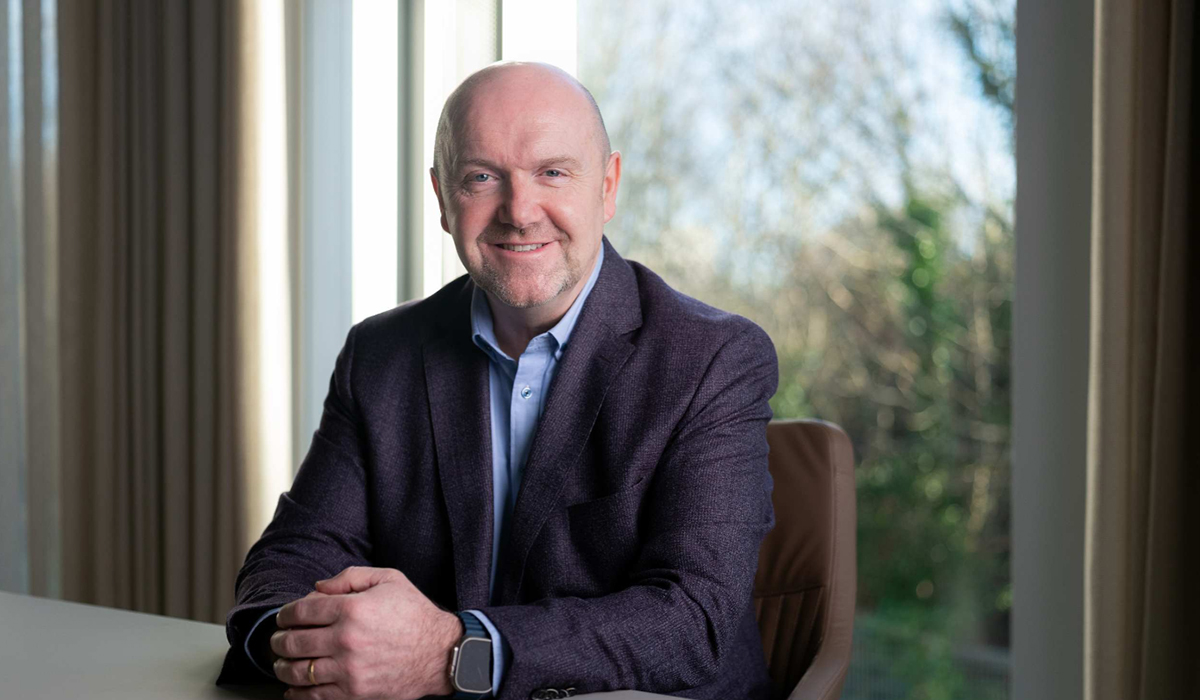
18 Oct Interview with David Kelly, CEO Gas Networks Ireland
Gas Networks Ireland operates and maintains the country’s €3 billion national gas network. In the first quarter of 2026, gas accounted for 38% of Ireland’s electricity generation. The company recently announced investments of €50 million in its southern network. Could you give readers of the LA Times an overview of Gas Networks Ireland’s operations?
Self funded through the bond markets, Gas Networks Ireland is a state-owned commercial company that owns and operates over 9,000 miles of gas infrastructure across the island, forming a key part of Ireland’s energy system and one of the most modern gas networks in Europe. While the country is moving toward a renewable future driven by wind and solar, gas remains essential as a backup for electricity generation. Currently, 80% of Ireland’s gas is imported via the UK, with the remaining 20% coming from the Corrib gas field off the coast of Mayo, which is now declining.
One of our main priorities is to replace that supply with biomethane, a renewable gas, produced from agricultural and food waste. Around two-thirds of the gas we import is used for electricity generation, while gas also heats about 40% of Irish homes. Depending on weather conditions, gas can provide anywhere from 10% to 90% of Ireland’s electricity, averaging around 40–45%.
What investments are being made to strengthen and expand GNI’s gas infrastructure and how will these projects help prevent future bottlenecks?
We are delivering record capital investment this year, with spending expected to grow significantly over the next five years. Our strategy focuses on three key areas, starting with resilience and security of supply. A major part of this is the development of an LNG terminal in Clare, which will serve as a strategic gas emergency reserve and is scheduled for completion by 2030. We are also investing in regional network reinforcement and infrastructure upgrades, including the decarbonization of our compressor stations in Scotland. Capital expenditure this year is around €260 million and is expected to rise to about €500 million by the end of the business plan period.
The second pillar of our strategy is decarbonization, centered on biomethane and hydrogen. We are currently connecting anaerobic digestion plants directly to the gas network, with three projects coming online in due course and several more under construction. Our long-term goal is to connect 50 to 60 large-scale plants, potentially supplying 10–15% of Ireland’s gas demand with carbon-neutral biomethane. Green hydrogen is a longer-term priority and will depend largely on the future development of offshore wind energy in Ireland.
How does demand on the gas grid reflect broader trends across Ireland’s industrial base? What changes are we seeing in how businesses and households are using natural gas today?
Homes are becoming more energy efficient, so customers are using less gas overall. Over time, we expect domestic heating to shift largely to electrification through heat pumps and highly efficient, low-consumption gas boilers. We are also seeing growing interest in hybrid heat pumps, which primarily run on electricity but can switch to gas during peak demand or very cold periods. This is a key transitional technology across Europe. In the longer term, we expect industrial heat — particularly in sectors like food and beverage and pharmaceuticals — to remain on the gas networks, as these processes are harder to electrify. The focus there will be on decarbonized gas solutions like biomethane and green hydrogen.
Since becoming CEO, you have made the transition to net zero one of Gas Networks Ireland’s central priorities. The company is advancing a wide range of decarbonization initiatives, including a €200 million program to decarbonize compressor stations in Scotland. You have cited Denmark as an inspiration for Gas Networks Ireland’s decarbonization strategy. How does Ireland compare with other European countries in the shift toward cleaner energy and where does the country have the strongest opportunities to accelerate this transition?
Ireland has made strong progress in renewables, particularly onshore wind, and has added significant solar capacity in recent years but remains heavily dependent on oil for transport and heating. Coal has been fully phased out, and gas — while still important — has lower emissions and plays a key balancing role. Looking ahead, we see value in Denmark’s model, where biomethane already meets 100% of gas demand on some days. That level of penetration is achievable over time, especially as overall gas demand declines, but we must remain ready for peak periods when wind and solar are low and storage alone cannot meet demand. Decarbonized gas will remain essential for system security.
France also offers a strong example, particularly in scaling biomethane alongside nuclear, wind and solar. Our view is that all technologies have a role depending on conditions and system needs. We are currently connecting 13 new peaking power plants that will only operate during periods of high demand. These modern plants are hydrogen-ready and in the long term could support fully low-carbon electricity production when hydrogen becomes available at scale, ideally from offshore wind.
The company is also advancing a green hydrogen pilot at Bellanaboy Bridge gas terminal. How is Ireland positioning itself within Europe’s emerging hydrogen economy and what steps are being taken to turn this potential into reality?
We expect to develop five industrial clusters across the country, including one in Bellanaboy. We have signed a strategic collaboration agreement with the Corrib gas field owners — Vermilion and Nephin Energy — to explore a green hydrogen pilot there, with the long-term goal of creating a hydrogen valley in the existing gas infrastructure network in Mayo. Another potential cluster is in East Cork, an established industrial hub with significant hydrogen demand, including from Irving Oil. These clusters would support hydrogen and HVO production and transport, forming the basis of a broader national hydrogen system.
Ireland’s offshore wind resource presents a major opportunity. Government plans include using up to 5 gigawatts of surplus wind power to produce hydrogen, which could then be exported to markets such as Germany, where demand is strong. We already have two subsea interconnectors to Scotland and North Dublin, which could potentially be repurposed or expanded for hydrogen export. Pipeline transport remains the most efficient option. Overall, this is a 15–20 year transition project.
Sustainability is a key priority for us. A major focus is the decarbonization of our compressor stations through the installation of electric motor drives, which will reduce our operating emissions by around 41% once implemented. This upgrade will also increase interconnector capacity, allowing more gas to flow through the system. We are also exploring innovative decarbonization projects, including work with customers producing bricks using biomethane and assessing the use of carbon-neutral cement in our operations. Across the business, we currently have around 200 decarbonization projects underway. In the short term, the decarbonization of our key compressor stations in Scotland remains our most important initiative.
Developing local talent and research partnerships is a core part of Gas Networks Ireland’s long-term strategy. Recent initiatives include the 2026 Apprenticeship Programme in partnership with SOLAS and the Gas Networks Ireland Innovation Challenge, which brings together academia and industry to solve future infrastructure challenges. What sort of talent and technical expertise has Ireland built in the gas and energy sector and how is Gas Networks Ireland working to close remaining skills gaps and develop a future-ready workforce?
Developing the next generation of engineers and technicians is a key priority for us. Our apprenticeship program — currently oversubscribed — typically brings in 20 to 25 school-leavers each year at around 18–19 years old. We are also focused on improving diversity in STEM, particularly increasing female participation. This year, for the first time, around 70 of 700 applicants were female, which is a very positive step. Our workforce is highly mixed in experience, with apprentices working alongside colleagues with decades of service. We have also recruited around 250 people in the past 18 months, mainly with engineering backgrounds, including significant international talent. We work closely with Further Education and Skills Service (SOLAS), universities and overseas partners to attract skills into Ireland. Compared to 10 years ago, our organization is far more diverse in both gender and nationality, although there is still more to do.
What steps are being taken to digitize Gas Networks Ireland’s operations, from customer platforms to the maintenance of its extensive pipeline network?
AI is an important priority for us, alongside resilience and security of supply. In recent years, particularly since the war in Ukraine, we have seen a significant rise in hybrid cyber threats, with attacks increasing fourfold. As a result, we have substantially increased investment in cybersecurity and staff awareness, particularly around phishing and fraud prevention. AI is already delivering value in our operations, especially in data management. Tasks that previously took months of manual effort can now be completed in days using AI-driven tools and “bots” that clean and analyze large datasets with high accuracy.
We are also working with partners such as McKinsey to explore AI applications in safety and prevention. One key example is our “Dial Before You Dig” program, which protects underground gas infrastructure. By combining AI with GIS and Ordnance Survey data, we can proactively alert developers and contractors when they are working near pipelines, improving safety during construction. With major construction activity across Ireland, safety remains our top priority and AI is helping us strengthen that protection.
You recently became president of the Dublin Chamber of Commerce. Dublin has emerged as one of Europe’s most compelling commercial hubs and was ranked first in Europe for Economic Potential in fDi Intelligence’s Major European Cities of the Future report. How has Ireland’s push to diversify its economy been reflected in Dublin’s evolving business community and which industries are now driving the city’s growth story?
It’s a challenging but exciting time to be president. Strong economic and population growth has driven record employment, but it is also placing pressure on infrastructure, particularly roads, transport and housing. Ireland has performed strongly since the post-pandemic period and the financial crisis, but we are now managing the “growing pains” of a fast-expanding, open economy. A key focus is infrastructure delivery. I work closely with Minister Jack Chambers and the Accelerating Infrastructure Task Force on this agenda, particularly around housing and enabling workforce demand.
The Chamber represents around 300,000 workers in the Dublin region and housing remains the top issue, followed by transport, energy costs and the wider cost of doing business, including regulation. We actively engage with policymakers to simplify and improve the business environment. Overall, it is a strong economy with real challenges — but fundamentally a “high-class problem” of continued growth.
What makes Dublin such a distinctive place to live and work and how does the city stand out as a launchpad for networking, international events and world-class visitor infrastructure?
What Dublin has in abundance is a strong sense of welcome. I travel a lot and what stands out is the culture of openness and engagement, seen in our pubs, hotels and wider hospitality sector. Ireland offers a compelling mix of commercial strength and experience. We have a rich literary and cultural history, a strong tourism offering and a compact geography that makes the whole country easily accessible from Dublin within a few hours. Initiatives like the Wild Atlantic Way have been very successful and golf is another major draw — we have around 550 courses in a small country. Many global companies are based here and visitors can combine business with easy access to some of Europe’s most scenic and unspoiled landscapes, all within a short journey.
You became CEO of Gas Networks Ireland in February after a distinguished 20-year career in senior roles across both the public and private sectors. You described this as an “exciting” time to take the reins of one of Ireland’s most important infrastructure organizations. What are your top priorities as CEO of Gas Networks Ireland in 2026 and what is your vision for the company’s role in Ireland’s energy system over the next five to ten years?
This year we are the most profitable commercial semi-state in Ireland and we expect to return the highest dividends to the state — something we are very proud of. As we mark 50 years in operation, our legacy dates back even further to the first gas mains laid in the Phoenix Park. Decarbonization is now our central priority, as we work to reduce reliance on fossil fuels and transition to cleaner energy. Our people remain our greatest asset, with a strong culture of long service — recently celebrating an employee with 50 years in the company. That experience is invaluable, but it also highlights the need to keep innovating and refreshing our talent base.
Looking ahead, my ambition is that over the next seven years we will make major progress on decarbonization, significantly lower the average age of our workforce and continue to strengthen our financial and commercial performance.
What is your final message to LA Times readers?
Ireland offers a strong combination of advantages: it is English-speaking, part of the EU and has a highly open, diversified economy with close ties to the U.S. and global markets. It is both a great place to visit and a growing, adaptable economy ready for future growth. We believe Ireland is well positioned and very welcoming for international investment and opportunity.
Sorry, the comment form is closed at this time.