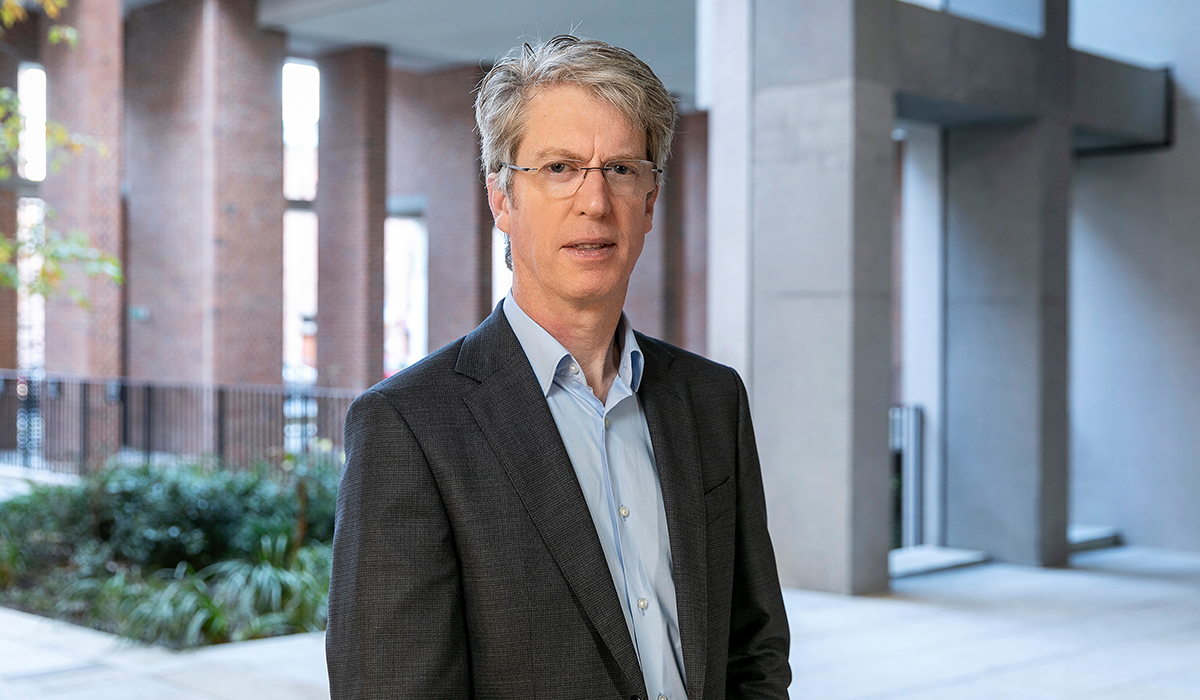
18 Oct Interview with Paddy Hayes, CEO ESB Group, Ireland
Ireland’s power generation sector has undergone a remarkable transformation in recent years, with renewable energy now at the center of the country’s electricity mix. The nation recently surpassed 8 gigawatts of installed renewable capacity, with wind now overtaking gas as the largest source of electricity generation. How does Ireland’s power generation sector compare with its European peers in terms of its energy mix, renewable capacity and future potential?
Over the past number of years, renewable generation has supplied approximately 40% of Ireland’s electricity demand. Ireland has kept pace with growing electricity demand while continuing to expand the share of renewable generation. We have seen significant growth in grid-scale solar generation across Ireland in recent years, alongside a strong portfolio of onshore wind. Microgeneration has also developed rapidly, with more than 180,000 rooftops now equipped with solar panels, allowing households to generate electricity for their own use, charge their electric vehicles and feed surplus back into the system.
EirGrid, Ireland’s transmission system operator, has played a key role enabling the integration of very high levels of renewable electricity onto the system. Investing in the capability to accommodate high levels of renewable generation has been key to Ireland harnessing our natural energy resources of wind and solar. Ireland has considerable potential for further renewable expansion, particularly through offshore wind. While still at an early stage, several projects around the Irish coast are progressing, creating a pathway to integrate even more renewable energy into the system. This added capacity will strengthen Ireland’s energy security by increasing the use of domestic resources, delivering cleaner power and supporting the ongoing electrification of heating and transport.
Established in 1927, ESB is Ireland’s leading energy company and continues to play a central role in the country’s energy transition. While profits were impacted in 2025 by the unprecedented effects of Storm Éowyn, the company continues to increase capital investment to meet Ireland’s growing energy needs. Could you introduce ESB Group to readers of LA Times and explain how its role and priorities have evolved under its current strategic plan?
ESB is owned 97% by the Irish state and the remaining 3% held through an employee ownership trust. It has been operating for nearly 100 years, having been established originally to develop Ardnacrusha, Ireland’s iconic hydroelectric power station on the River Shannon, which was built between 1925 and 1929. At that time, Ardnacrusha represented a major investment for a newly independent Ireland, based on a clear vision that electricity would be fundamental to the country’s social and economic development. Almost 100 years later, that vision remains just as relevant.
Electricity continues to be a driver for social and economic development and Ardnacrusha stands as a remarkable example of engineering excellence and as a testament to the operations and maintenance of generations of ESB staff, ensuring that it is still producing renewable electricity. Building on that legacy, ESB operates across the full electricity value chain, with operations in Ireland, Northern Ireland and Great Britain. ESB’s generation portfolio includes a range of technologies such as hydro, wind, solar, gas and battery storage, as well as synchronous compensators that support the grid and enable greater levels of renewable integration. ESB’s electricity retail business, Electric Ireland, serves more than one million residential and business customers. In addition, ESB Networks and NIE Networks own the transmission networks and own and operate the electricity distribution networks in Ireland and Northern Ireland.
ESB is committed to making a difference. Our “Driven to Make a Difference” strategy recognizes that electricity is essential to social and economic development and is centered on three priorities. The first is developing and connecting more renewable generation to support a cleaner electricity sector. The second is investing in the infrastructure required for business and domestic customers, ensuring that the electricity network remains resilient, affordable, flexible and modern. The third is enabling customers to make greater use of clean electricity in their daily lives, through the electrification of heat and transport.
This commitment extends to Electric Ireland SuperHomes, a joint venture with the Tipperary Energy Agency that helps homeowners retrofit and electrify older properties and ESB eCars which provides electric vehicle charging infrastructure.
ESB is also involved in the provision of telecommunications services, both directly and through SIRO, our high-speed broadband joint venture with Vodafone, which uses the electricity network infrastructure to support connectivity. Across all these areas, our focus remains the same: delivering infrastructure and supporting customers so that clean electricity can drive social and economic development.
ESB recorded its highest-ever level of capital investment in 2025. Major recent milestones include ending coal generation at Moneypoint and transforming the Co Clare site into a renewable energy hub. At the same time, the government’s PR6 program is paving the way for the largest investment in Ireland’s electricity network to date. What recent onshore energy projects have had the greatest impact on Ireland’s electricity supply and what specific flagship developments are expected to shape the next phase of growth?
Moneypoint is a great example of the energy transition. Built in the 1980s, ESB delivered the transition of Moneypoint away from coal generation ahead of schedule in 2025. Moneypoint is now taking on a new role, providing back-up energy security, with wind turbines already installed on the site and a large synchronous condenser supporting the electricity system to accommodate greater levels of wind energy.
One of the most significant developments in recent years has been the growth and deployment of large-scale battery technology across Ireland. Grid scale batteries supplement ESB’s long-standing pumped storage facility at Turlough Hill, which has been operating for more than 50 years. It stores energy by pumping water uphill when electricity is available and releases it back into the system when needed, such as when renewable generation is lower or when demand is at its peak. Advances in technology mean that ESB, along with other innovative companies in the Irish electricity sector, can provide similar flexibility with batteries. This is helping to make greater use of renewable energy, strengthen energy security, reduce carbon emissions and place downward pressure on wholesale electricity prices.
Looking ahead, the next major phase of Ireland’s electricity transition will be driven by offshore wind generation. ESB is already involved in offshore wind consortiums in Great Britain, including projects off the coasts of East Anglia and Fife, and is bringing this experience to projects under development and at the planning stage around the Irish coast. Enabling this next stage of electricity sector development and to continue to provide capacity to meet growing domestic and industrial demand, requires continued investment in electricity infrastructure. The PR6 regulatory investment program, running from 2026-2030, represents a significant expansion of Ireland’s electricity grid, increasing its capacity to accommodate more renewable generation while supporting housing, economic development and industrial growth. It will also strengthen the security, resilience and flexibility of the network.
ESB also invests heavily in digital and data, one of the foundational pillars of our strategy and a key enabler for modern electricity systems. In 2025, ESB recorded its highest-ever level of capital investment in clean electricity infrastructure and we are on track to overtake that rate of investment and delivery through 2026.
Sustainability remains at the heart of ESB’s strategy, Driven to Make a Difference: Net Zero by 2040. In 2025, ESB’s carbon intensity was 53% lower than its 2005 baseline, while the rollout of smart meters surpassed two million installations nationwide. What challenges does Ireland face in achieving its net-zero ambitions and how can those challenges be turned into opportunities for growth and innovation?
The opportunities are enormous. ESB is focused on continuing to deliver electricity infrastructure to underpin Ireland’s social and economic development, supporting growing demand for new housing connections, demand driven by industrial growth, including the investment promoted by the IDA and demand from the electrification of transport. This presents the opportunity to grow additional generation capacity, which is why ESB, along with others in the sector, are focused on maintaining a steady level of investment in new generation projects, meeting the needs of households and industry and extending the foundations for a cleaner electricity system.
As the sector grows and changes, a key requirement is having the people and expertise to deliver this transition. Alongside the expertise coming from universities, we need the practical skills of craftspeople and workers across the wider value chain. ESB is hiring more engineers, scientists and skilled craft workers, including network technicians. Developing and growing this workforce will be essential and Ireland’s strong education and training systems are helping us meet that need. ESB’s own training center is playing its part, with more than 100 young people each year, including an increasing number of women, completing a tremendously successful four-year apprenticeship program to qualify as network technicians.
ESB launched its Emerging Technologies Insights report in November. How important is research and development to ESB’s strategy and how is the company helping advance new energy breakthroughs necessary for Ireland’s successful transition?
Research and development is absolutely essential to our strategy. We are directly involved with a number of research institutes in Ireland, as well as our own innovation activities and we work extensively with international partners. For example, we are a member of the Electric Power Research Institute (EPRI), a global organization where electricity companies from around the world collaborate on innovation. We are also part of Free Electrons, a global startup program where we partner with utilities including EDP in Portugal, E.ON in Germany and Origin Energy in Australia.
Looking ahead, one of the biggest challenges and opportunities will be finding cost-effective solutions for long-duration electricity storage. As renewable generation grows further through the 2030s, the ability to store surplus energy will become increasingly critical, not only for daily peaks but also for longer periods when wind generation is lower. Ireland is well positioned to contribute to the development of long duration storage and ESB is involved with consortium partners exploring storage opportunities, including subsea storage solutions, while other companies in the Irish market are also examining different approaches to long-duration energy storage.
International collaboration has been critical to Ireland’s energy transformation. According to the USA’s International Trade Administration, U.S. companies continue to supply technology, equipment and expertise across the sector. ESB Networks and the USA’s Electric Power Research Institute have expanded cooperation on renewable energy integration and smart grid technologies. How has the USA contributed to Ireland’s energy transition and how is ESB working to strengthen that relationship?
The EPRI, with its headquarters in the U.S. and its European center based in Dublin, is a great example of the strong connection between research efforts in the United States and Ireland. We have ongoing cooperation with EPRI on electricity sector research, which is highly beneficial.
Beyond that, as the scale of investment required in electricity infrastructure continues to grow, collaboration and partnerships, bringing together different expertise and capabilities, will be increasingly essential to delivering major projects. It is very clear that cooperation between electricity users and suppliers, can facilitate the optimization of the overall system in the best interests of all customers. This approach is becoming more established across the value chain, particularly with energy-intensive industries and with the transport sectors as electrification intensifies.
You have led ESB since 2021 and have overseen a period of significant change as the company accelerates its transition toward net zero. What are your top priorities today and where would you like to see ESB and Ireland’s energy sector over the next five to ten years?
ESB’s priority is to support continued social and economic growth with increasingly clean electricity. This means developing and connecting more renewable generation, delivering the resilient infrastructure required for business and domestic growth and empowering customers to electrify. It means continuing to build network infrastructure, delivering on our ambitious offshore wind plans and innovating to ensure Ireland has the long duration storage needed to complement our excellent renewable resources. It also means continuing to innovate to support customers, whether through providing heating for homes and charging for transport, supporting investment in sectors such as pharmaceuticals and technology, or expanding renewables to strengthen Ireland’s energy independence, affordability and security, electricity and electrification is key.
ESB has seen many changes over the past almost 100 years. I am confident that ESB, together with the electricity sector in Ireland, will continue to support social and economic growth, will continue to underpin decarbonisation and will continue to make a difference.
Sorry, the comment form is closed at this time.