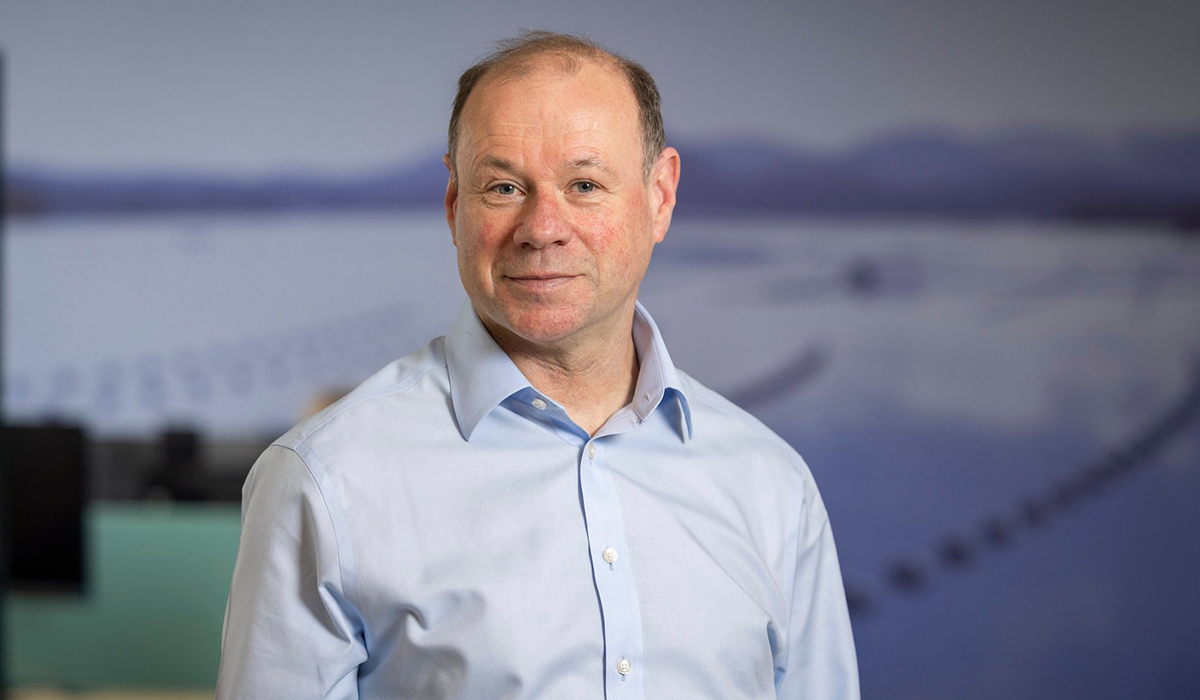
18 Oct Interview with Richard Donnelly, CEO Bord Iascaigh Mhara (BIM), Ireland
Ireland’s agrifoods industry accounts for around 8% of GDP and supports almost 160,000 jobs nationwide, with seafood and aquaculture remaining among its most iconic industries. While seafood exports rose by 9% in 2025 to €635 million, industry stakeholders including BIM and Bord Bia have highlighted significant challenges ahead. How does Ireland stand out globally in seafood and aquaculture and what has helped build its strong international reputation?
Ireland’s seafood sector is small in global terms, so we focus on high-value niche markets. Our fisheries produce premium shellfish such as lobster, crab, oysters and mussels, while species like mackerel are increasingly in demand, although quota cuts have created constraints. The strategy is to position Irish seafood at the higher end of the market to maximize value. In aquaculture, we farm mussels and oysters and Ireland also has a long history in salmon farming, dating back to the 1850s, making us one of the earliest countries to farm salmon commercially.
At Bord Iascaigh Mhara (BIM), we reoriented the sector in the mid-1990s towards premium markets, including pioneering organic salmon production. This has moved Irish salmon into a higher price tier — typically around 30% more — supported by strict standards and certification. Ireland’s exposed coastline also influences product quality. Unlike fjord-based systems in countries such as Norway or Scotland, our more open waters create stronger currents, meaning the fish swim more and develop firmer flesh. Combined with organic standards, this helps differentiate Irish salmon in global markets.
Another key area of focus is Ireland’s seafood processing industry. Traditionally, it relied mainly on local raw materials, but as the sector expanded, processors began sourcing from a wider range of regions. The emphasis has shifted strongly towards consumers, with major investment in innovation and technology. Today, the industry produces more consumer-ready products, including smaller portions, diverse flavors and ready-to-eat options. This has driven growth in both domestic and export markets. Ireland’s seafood sector is built on three pillars: fisheries, aquaculture and processing. A growing fourth area is aquatech — technologies that support global aquaculture — and this is an increasing focus for BIM. Seafood exports are worth about €758 million and the sector supports around 7,500 direct jobs and up to 16,000 overall. While not large in scale, its impact is significant in coastal communities, particularly along Ireland’s west coast, where it plays an important role in sustaining the social and economic fabric of rural areas.
Ireland recently introduced a new support scheme to help fishing vessel owners manage rising fuel costs. What is being done at the national level to help the industry overcome current challenges and what is needed to future-proof the sector?
We see the main challenges facing the sector in three areas. The first is raw materials — access to quotas, aquaculture production and imported inputs. The second is global volatility, including fuel costs, transport disruptions and wider geopolitical or market shocks, which an open economy like Ireland is exposed to. The third is environmental change, particularly rising sea temperatures and their impact on fishing and aquaculture. We respond by tailoring support programs to each of these areas.
BIM provides grant support, but also acts as a knowledge and advisory service, offering market intelligence on prices, trends and global demand to help businesses make informed decisions. We also have a strong scientific capability, with around 130 staff, many with marine science backgrounds. They work on issues such as improving oyster and mussel production and adapting to climate change through genetics, disease resistance and other innovations.
Finally, we are focused on attracting private investment into the sector. Through partnerships such as with Hatch Blue, a global aquaculture investment firm, we aim to help Irish companies access equity funding and become more commercially competitive, alongside public support.
Established in 1952, BIM is Ireland’s seafood development agency and is responsible for supporting the growth and sustainability of the country’s fishing, aquaculture and seafood processing industries. The organization is currently delivering its 2022–2026 strategy while preparing its next phase of development. Can you introduce BIM to our readers and explain how the organization embodies Ireland’s rich fishing heritage and global leadership in seafood?
BIM is a unique organization globally and in Ireland. Established in 1952, it was the first government body created to support a specific industry sector, originally focused on developing Ireland’s fishing resources, including boat building and financial support. Since then, BIM has evolved alongside the industry. As aquaculture emerged in the 1960s and 1970s, we adapted and we continue to evolve today as the sector faces new transitions. That long history has taught us that change is constant and we must adapt just as the industry does.
Unlike many agencies based solely in the capital, BIM is present all-around Ireland’s coastline. This hands-on, community-based approach reflects the nature of the sector. We also operate two fisheries training colleges in the northwest and southwest, providing essential skills such as safety, firefighting and skipper training. Together with our business, grant and technology supports, this makes BIM a distinctive, full-service organization supporting Ireland’s seafood industry from training to innovation.
In April, Goatsbridge Trout Farm completed a €138,000 investment to increase premium trout production. What major investments have been made under BIM’s stewardship to modernize Ireland’s seafood infrastructure and how will these projects support future growth?
Goatsbridge Trout Farm is a strong example of a family business that has grown across three generations. Established in the 1950s as a trout producer, it was originally focused mainly on production. Over time, the business transformed through investment in more efficient farming techniques and better use of site conditions, supported by technical input and planning for long-term development.
A key focus was also on business strategy, particularly brand building and expanding processing capacity. Today, around 50% of the business is in processing and sales to retail and food service, with the other 50% still in production. This shift has helped more than double output and significantly increase turnover. The company has also expanded through acquisitions of other trout farms, growing from a small family operation into a multi-site business with a strong brand presence in Ireland, the UK and export markets.
Ireland controls around 12% of EU waters and produces a diverse range of seafood products, including pelagics, shellfish, salmon and whitefish. The sector is increasingly focused on innovation, value-added products and new commercial opportunities. Can you give readers of LA Times an overview of Ireland’s leading seafood products and the brands that stand out in international markets?
Ireland’s number one seafood export is farmed Atlantic salmon, much of it organic. Key brands include Clare Island (developed by Mowi), Ocean Farm by Gallagher Brothers in Donegal and the Irish Salmon Producers Group. In shellfish, particularly wild capture, there has been strong focus on brand development. Companies such as Sofrimar, Errigal Bay and Rockabill Shellfish have all invested heavily in building recognized brands. In the pelagic sector, companies like Donegal Fish have significantly upgraded processing, particularly for species such as mackerel. Ireland’s quota share is relatively small, so with declining volumes, the focus has shifted to adding value.
Following Brexit, support through the Brexit Adjustment Reserve allowed major investment in processing technology. This has enabled companies like Donegal Fish to develop advanced, automated production lines, producing higher-value products such as mackerel fillets for export markets including Japan. One key area of focus is the use of fish co-products such as heads, tails and trimmings from processing. These are highly nutritious and often contain valuable minerals and vitamins, sometimes even more than the fillet itself.
We are working to reintroduce these materials into the human food chain by developing consumer products like fish cakes and other seafood products. Another important pathway is higher-value uses in nutraceuticals and biopharma, where key compounds are extracted for animal feed additives or human supplements. This represents a shift towards full resource efficiency—moving from simple harvesting to using 100% of the fish, with no waste. Our goal is that everything taken from the sea or aquaculture systems is fully utilized. While some material will go into animal feed, the priority is to maximize value through high-quality, consumer-ready products and higher-end markets.
BIM has recently supported initiatives ranging from a seaweed industry working group to the world’s first pure liquid magnesium plant for skincare products. How important is research and development to the sector’s future growth and what recent breakthroughs best highlight its innovation capabilities?
We have a wide range of innovation activities, mainly focused on aquaculture and fisheries development. In aquaculture, we run an Innovation Studio that brings startups into the sector to solve real industry challenges. Each year, companies work on practical solutions such as oxygen monitoring systems or feed additives for shrimp farming in markets like Honduras, Ecuador and Thailand, often adapting technologies from other sectors such as pharmaceuticals.
In fisheries, we focus on improving efficiency, including gear innovation such as net modifications that reduce fuel use, improve selectivity and lower environmental impact. We are not a pure research organization, but we work closely with universities and agencies like Teagasc to access research and turn it into commercial solutions. BIM’s focus is always on practical, market-driven innovation that delivers real economic value to the industry.
How are BIM and other industry stakeholders using digital technologies to improve efficiency, traceability and decision-making across the seafood value chain?
Through our Innovation Studio and in partnership with Hatch Blue, we gain early access to global aquaculture technologies and can bring promising solutions into Ireland for testing and adoption. We also work with Enterprise Ireland and Irish Manufacturing Research on digitalization in the food processing sector, including AI and advanced manufacturing tools. This allows us to trial new technologies directly in processing plants, provide training and support companies in adopting them effectively. Typical projects focus on improving efficiency, such as better yield measurement, automation and data-driven decision-making. Given high labor costs, increasing productivity and maximizing yield are key priorities.
By running real-world trials in factories, we help companies move from awareness to implementation, improving competitiveness and efficiency. These partnerships also give us early access to emerging technologies and a first-mover advantage in the sector.
In May, BIM hosted its 2026 AquaScale Innovation Studio+ programme. How important is supporting SMEs and entrepreneurs within Ireland’s blue economy and what success stories have emerged in recent years?
Ireland has a strong entrepreneurial base and a wide range of skills across genetics, pharmaceuticals, engineering and financial services. When BIM looked at global aquaculture challenges, we recognized that this existing knowledge base could be applied to a new and growing industry.
Many of the companies we work with are transferring technologies from adjacent sectors. For example, Aquamonitrix, originally focused on wastewater monitoring, has adapted its systems for aquaculture, where water quality monitoring is critical. In feed innovation, companies working in poultry and pig nutrition are now applying their expertise to improve disease resistance in shrimp farming. One example, Auranta, has expanded through our AquaScale programme into markets such as Honduras, Ecuador and Thailand, developing feed additives that reduce the need for antibiotics.
In fisheries, we are also supporting engineering companies affected by declining wild catch volumes, helping them diversify into aquaculture markets in countries like Norway and Scotland. Recently, we attended Aquaculture UK with 13 Irish aquatech companies alongside Enterprise Ireland, where they secured strong interest and new business opportunities. Our role is to connect Ireland’s existing skills to global aquaculture opportunities and support companies in scaling into new markets.
More than 50 seafood companies are now verified members of Ireland’s Origin Green programme, while BIM continues to support initiatives such as ECOPACT, the CQA Programme and the Green Seafood Business Programme. How has Origin Green helped strengthen sustainability across Ireland’s seafood industry and reinforce the country’s reputation for responsible production?
Origin Green is run by our sister agency Bord Bia and it is a strong national sustainability program that supports companies in building and verifying their environmental credentials. In seafood, we complement this with fishery improvement programs, which assess wild capture fisheries against environmental standards and help drive continuous improvement. This supports Ireland’s goal of positioning itself as a leader in sustainable seafood. Some fisheries are also certified under the Marine Stewardship Council (MSC).
Ireland is unique in having its entire mussel sector—both bottom-grown and rope-grown—MSC certified. In aquaculture, Ireland is a leader in organic salmon production, with around 99% of output certified organic, making it one of the highest levels globally. This reflects a deliberate policy choice to move the sector into premium, sustainable markets. Together, these initiatives—Origin Green, MSC certification, fishery improvement programs and organic standards—form a wider sustainability framework that continues to evolve and strengthen over time.
Ireland’s seafood industry exports to 71 markets worldwide. In 2025, the EU accounted for 55% of exports, followed by the UK and Africa. The USA remains an important market for Irish seafood and a key partner in the development of the wider industry. In March, the Sea-Fisheries Protection Authority confirmed that restrictions on exports of salmonids and spiny lobster to the United States had been lifted. How important is the U.S. market for Ireland’s seafood producers and how is BIM strengthening relationships in North America during a period of trade uncertainty?
The U.S. is an important market for Irish seafood, not necessarily in volume but in high-value, premium niches. Bord Bia, our sister agency, with responsibility for promoting Irish produced food in Ireland and overseas, supports Irish companies at major events such as the Boston Seafood Expo, held annually around St. Patrick’s Day. The U.S. market is particularly strong for premium products like organic salmon and we have also developed exports of mussels. We are now finalizing access for live oyster exports, which is a significant milestone, as only a limited number of EU countries can currently export live oysters to the U.S. Despite challenges such as tariffs, our focus remains on high-end markets and strong brand positioning. We also link seafood with tourism through initiatives like Taste the Atlantic, which allows visitors to experience producers and products directly. Overall, while Europe remains our main volume market, the U.S. is key for premium positioning, brand building and added value.
How important is the USA as an investor in Ireland’s seafood and aquaculture industry and what opportunities should US investors be paying attention to in 2026?
Through our Aquatech programme and partners such as Hatch Blue, which also operates in Hawaii, we are building stronger links with U.S. investors and companies. Our goal is to position Ireland as a global leader in aquaculture innovation and a base for companies looking to access the European market.
Ireland offers an English-speaking talent pool and strong support from agencies such as BIM, Enterprise Ireland and IDA Ireland, making it an attractive launchpad for U.S. aquaculture firms. We already have several companies in the pipeline exploring this route. At the same time, we are attracting venture capital and private investment into a growing startup ecosystem. The aquatech sector has expanded rapidly in recent years, reaching over €200 million in activity, with many early-stage companies seeking equity investment. BIM plays a key role in connecting these businesses with funding and scaling opportunities.
You officially became CEO in May after serving as Interim CEO since November. Bringing more than three decades of experience across the seafood industry, you are now leading BIM as it prepares its next strategic roadmap. What are your top priorities for BIM today and where would you like to see the organization and Ireland’s seafood industry over the next five to ten years?
It is a privilege to lead an organization with 75 years of history at such an important moment. Looking ahead, our focus is on strengthening technology and innovation in aquaculture, while ensuring our seafood processors, fishers and aquaculture producers remain competitive and sustainable for the next generation. We are also investing in programs for young people to attract and support the next generation of talent. A key priority is sustaining rural coastal communities across Ireland, where this sector plays a vital economic and social role.
Aquaculture, fisheries and aquatech offer real opportunities for people to build careers in vibrant coastal regions, while working in a modern, innovation-driven industry. Our goal is to keep Ireland at the forefront of the premium, high-value seafood market and ensure the sector continues to lead into the future.
What is your final message to LA Times readers?
Ireland is a unique island within the European community, with a strong maritime heritage and a dynamic people. Through organizations like BIM, we are building on that legacy to further develop the seafood sector and look ahead to the next 75 years. We remain open for business and welcome collaboration, investment and visitors.
Sorry, the comment form is closed at this time.